
Is it a pipe or the ground?
Use the timing test before you hire anyone. If the floor or wall gets wet after rain or snowmelt and dries out in dry weather, the water is coming from the ground. If it appears when water is used in the house, or stays wet in dry weather, suspect a supply line, drain, water heater or appliance.
Plumbing causes can be fixed by a plumber. Groundwater entering through the foundation walls or floor slab often calls for a waterproofing or foundation contractor, and we will tell you plainly when that is the right call.
Clues that separate the two
| What you see | More likely | Next step |
|---|---|---|
| Wet after heavy rain only | Groundwater | Check gutters, grading and sump |
| Wet when a tub or washer runs | Drain or supply leak | Leak detection |
| Damp wall that stays damp in dry weeks | Pipe in wall or seepage | Moisture reading and meter test |
| Water around floor drain after rain | Sewer or drain overload | Camera the line |
| Musty air, no visible water | Humidity or slow seepage | Dehumidifier and airflow check |
Condensation on cold pipes also looks like a leak. Wipe the pipe dry and see if it beads up again on humid days.
Tell us when your basement gets wet and what you have seen. We will say whether it sounds like plumbing.
(732) 466-1098What a plumber can and cannot do
A plumber works on pipes, drains, sump pits and the pumps that move water out. That covers interior drain systems, sump installation, floor drain backflow protection and finding leaks in lines. It does not cover cracked foundation walls, structural movement or exterior membrane work.
If a crack is leaking or a wall is bowing, a foundation contractor or structural engineer is the right first call. We would rather say that than sell you a drain that does not fix the cause.
According to the New Jersey Division of Consumer Affairs plumbing board, plumbing in New Jersey may only be performed by a master plumber or an authorized plumbing contractor. That matters here because sump lines and interior drain connections count as plumbing work, so ask who is actually doing the piping.
Source: NJ Division of Consumer Affairs, State Board of Examiners of Master Plumbers FAQ, njconsumeraffairs.gov/plu/Pages/FAQ.aspx
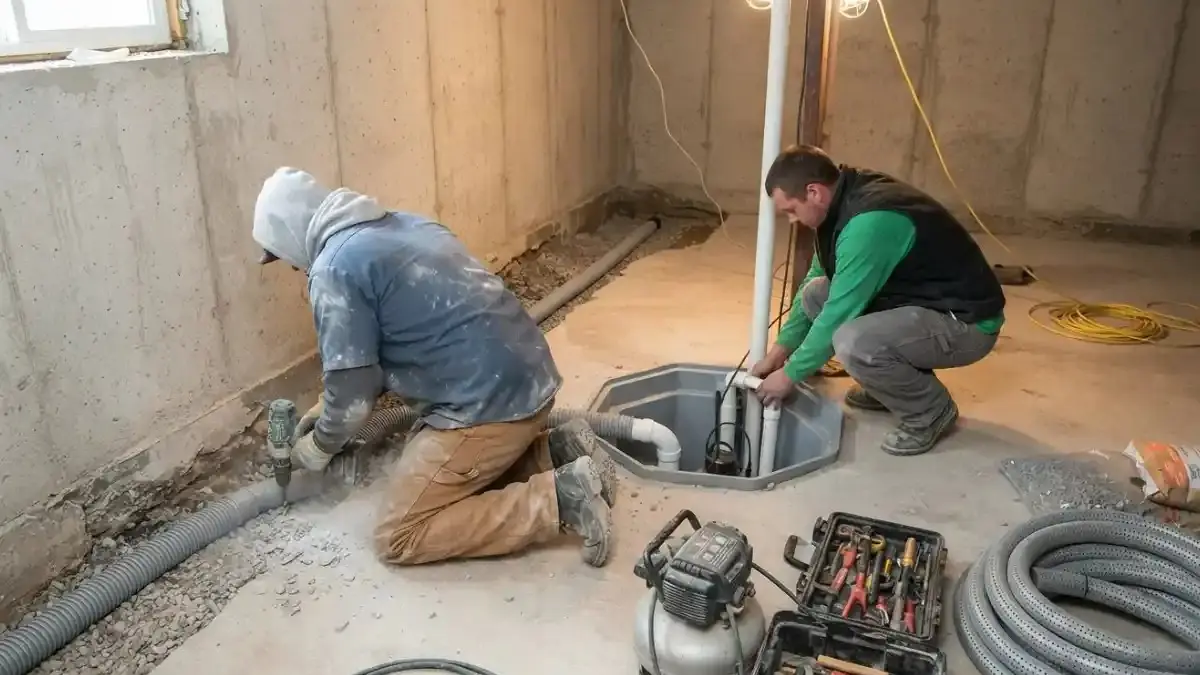
Interior drains and sump systems
Perimeter drain channel
A channel along the base of the wall catches water and carries it to a pit.
Sump pit and pump
Collects the water and pushes it out of the house. See sump pump installation and repair for the pump side.
Battery backup
Keeps a pump running when power fails during a storm.
Check valve and discharge
Stops pumped water flowing back and sends it away from the foundation.
Where the discharge pipe may run is a local question. Ask the building department or public works office whether your township limits sump discharge to the street or a neighbor's lot.
Local water and flooding questions
We do not have a sourced flood history for New Brunswick, so we will not describe one. You can look up whether your address is in a mapped flood zone on the FEMA flood map service, and ask the building department about past basement water in your area. Both answers change how much drainage work is worth doing.
In Highland Park, a Middlesex Water subsidiary operates the borough sewer network, so floor drain backups after storms there are worth reporting to that operator. In North Brunswick, ask the township how sump discharge is handled before routing a pipe.
Source: Middlesex Water, Utility Service Affiliates, Highland Park page.
Humidity and finishing a basement
A damp basement can feel wet without any leak. Keep indoor humidity moderate with a dehumidifier, vent dryers outside and do not store cardboard on bare floors.
Before finishing the space, fix the water source and run a moisture check on walls and floor. Rough-in plumbing for a new bathroom or laundry is a separate job, covered under plumbing installation. Ask the building department what permits a finished basement needs.
How a basement waterproofing visit works
- Call and describeTell us when and where water shows up and whether rain matters.
- Walk the basementWe look at the pit, floor drain, water heater, laundry and visible pipes.
- Test for plumbingA meter test and a look with a moisture meter rule plumbing in or out.
- OptionsIf it is ours to fix, you get a clear price before work starts. If not, we say who to call.
Factors that set the cost of a drier basement
Homeowners policies often cover sudden pipe failure but not wear, and groundwater seepage is often excluded. Ask your insurer before work starts.
We give you a real number by phone once we know what you have. Same-day appointments are available when the schedule allows, and the price is clear before work starts.
Frequently asked questions
Track timing. Water after rain points to groundwater. Water when you use fixtures, or in dry weather, points to a pipe.
No. If water comes through a crack in the foundation wall, you need a foundation contractor. We can rule plumbing in or out first so you know who to call.
Ask the building department. Requirements differ by municipality and we do not guess them.
After we see the basement and know the cause, you get a clear price before work starts. Costs depend on the factors listed on this page.
It handles humid air, not water entering through the floor or walls. Use it alongside a fix for the actual source.
Usually, once the water source is dealt with and moisture readings stay normal. Ask the building department about permits for the finished space.
It moves water out of a pit, but it depends on drainage that gets water to the pit. A backup power source is worth considering.