
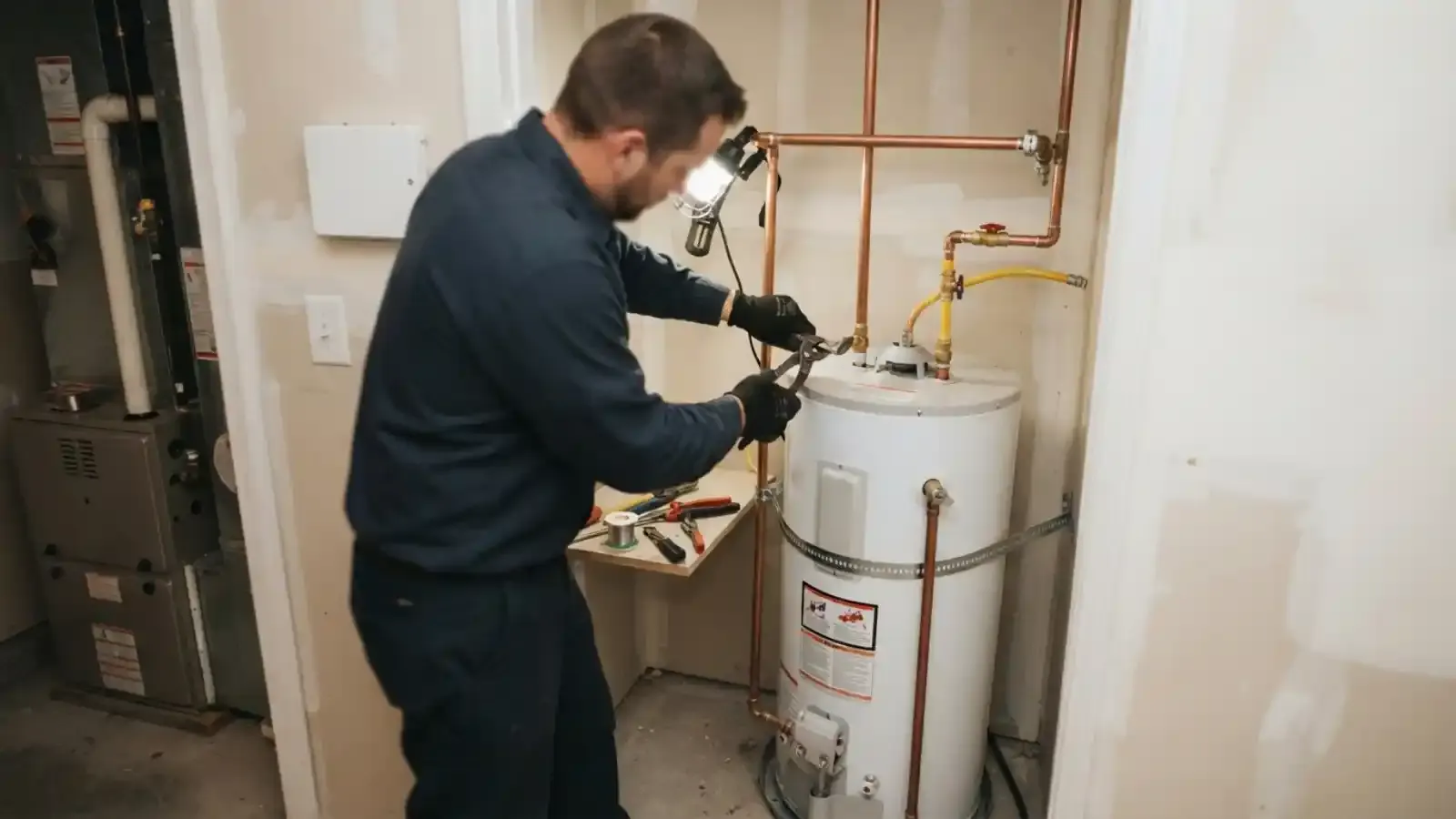
Tank failed or flooding? Do this before we get there
A failed water heater is urgent because the damage grows by the minute, and our dispatch line runs 24/7. While you wait, the steps below limit the mess and keep you safe. Tell the dispatcher what you did so the plan for the day starts with the facts.
If you smell gas, leave the building and call the gas utility or 911 before anything else. Do not flip switches or look for the source of the smell.
- Turn off the power at the breaker for an electric unit. For a gas unit, set the gas control to off or pilot.
- Close the cold water supply valve on the pipe feeding the top of the tank. Turn it clockwise until it stops.
- If water has reached outlets, appliances or a panel, stay out of the standing water and shut off power to that area from a dry spot only.
- Open a hot tap upstairs so the system can vent while the tank drains.
- Take a photo of the data label on the tank. Fuel type, capacity and model help us plan the swap.
Repair or replace: how to decide
| What you see | Usually points to | Direction |
|---|---|---|
| Water pooling under the tank body | A corroded or cracked tank shell | Replace |
| Rust colored hot water only | Corrosion inside an ageing tank | Replace, or inspect first |
| Lukewarm water, tank otherwise dry | A failed element, thermostat or burner part | Repair is often possible |
| Drip from the relief valve pipe | A worn valve or excess pressure | Needs diagnosis |
| Rumbling or popping noises | Sediment hardened at the tank bottom | Flush, or replace if old |
Age matters, and the data label usually carries a date code. A tank that has run for many years and is now leaking from the shell is past repair, because the steel itself has failed. A younger tank with a dead part is a different conversation, and our water heater repair team can price that route.
Tank gone and water on the floor? Call now and describe the unit to the dispatcher.
(732) 466-1098Water heater leaking: when the tank itself is the problem
Not every wet floor means a dead heater. Loose fittings, a dripping relief valve or a leaking supply connector can all look the same at first glance. Dry the area, wait ten minutes, and watch where the first new drop forms.
Water that seeps from the bottom of the jacket or the seam between tank and base is the pattern that most often ends in a replacement. The inner tank holds the water, and once it breaches, insulation soaks through and the leak keeps coming. Closing the cold valve buys time but does not fix it. For a slow leak, leak detection can rule out nearby pipes.
What a same-day swap looks like
A new heater of the same capacity still needs a permit in New Jersey, according to the state Department of Community Affairs code alert. It is classed as minor work, and the job may begin once notice is given to the local enforcement agency, so the permit is part of the swap, not an extra.
- Describe the old unitGive fuel type, tank size, location and flue details. We tell you what the swap involves.
- Confirm the plan and priceYou get a clear price before work starts, based on the unit and the conditions on site. Nothing begins until you agree.
- Drain and disconnectPower or gas is shut off, the old tank is drained and the connections come apart. Water damage around the base is checked at this point.
- Set and connect the new unitThe new heater is placed, supply and hot lines are connected, and venting or electrical work is matched to the fuel type.
- Fill, test and haul awayThe tank is filled with air purged from the lines, then checked for leaks, correct temperature and safe operation. The old unit leaves with us when disposal is part of the agreed job.
Source: NJ Department of Community Affairs code alert, nj.gov/dca/codes/alerts/pdfs/OM_MW_03052018.pdf
Tank, tankless or heat pump
Another tank, same footprint
The simplest swap. Best when the existing gas, electric and venting setup is sound and you want hot water back with the least change.
Tankless
Heats on demand and takes less floor space. Gas models often need venting and gas line changes, so the job is bigger. Read our page on tankless water heaters before you decide.
Heat pump unit
Moves heat rather than making it and can use less electricity. It needs room, airflow and a spot where cool exhaust air does no harm. Ask about fit before choosing.
When the old heater is already dead, a like-for-like tank is usually the simplest route. Switching type can be a good plan, but it is often better made when you are not standing in cold water.
What shapes the cost of a replacement
On insurance, homeowners policies often cover sudden water damage from a failed appliance but not the heater itself when it simply wore out. Ask your insurer before you assume either way, and keep photos of the tank and the floor.
We do not post prices here because every job differs. Call (732) 466-1098, describe the unit, and we will give you a real number by phone before any work starts.
Water quality, scale and your tank
Hard water leaves scale on heating elements and the tank floor, which shortens the life of a heater and makes it noisy. How hard your water is depends on your supplier. We have no verified hardness figure for New Brunswick, so ask your water utility for its annual water quality report.
For a nearby comparison, the township of North Brunswick lists hardness of 67.5 ppm as calcium carbonate in its 2022 report, which is on the soft to moderately soft side. New Brunswick may differ, so do not assume the same number applies. If you are choosing between units, ask the technician how scale could affect each type.
If you live in North Brunswick or East Brunswick, the same advice holds. Check which utility serves your street before you read a report.
Source: Township of North Brunswick 2022 water quality report, issued June 2023.
Frequently asked questions
Yes. Dispatch runs 24/7, so a tank that fails at midnight or on a Sunday gets the same call-back as one that fails on a weekday. We offer same-day appointments when available.
Shut off power or gas and close the cold supply while you wait, then describe the unit to the dispatcher.
Water coming from the tank shell or seam is the clearest sign of a failed tank. A dead element, thermostat or burner part is more often repairable. A technician can confirm which one you have.
If the tank is leaking, closing the cold supply and cutting power or gas stops most of the damage. Many people do wait. Call anyway, because a booked appointment is better than guessing at breakfast.
Rules vary, and we do not guess at them. Ask the New Brunswick building department whether your replacement needs a permit, and tell the dispatcher what they say.
Size depends on how many people live in the home, how many bathrooms you run at once and the fuel. We start from what is installed now and adjust if your usage has changed.
We can haul the old unit away when that is part of the agreed job. Say so on the call so the price reflects it.