
Water coming back up: do this first
A drain that is overflowing or pushing water back up cannot wait for the weekend, and our dispatch line runs 24/7 for exactly this. While you wait for the call to connect and a technician to be scheduled, stop using every water source in the house. That means no flushing, no dishwasher, no washing machine and no showers.
If the water is coming from a basement floor drain or a toilet, move belongings off the floor and keep children and pets away. Dirty backup water carries bacteria, so wear rubber boots and gloves if you have to walk through it.
- Do not pour chemical cleaner into a drain that is already full. It sits in the water and can splash back on you.
- Unplug anything electric near standing water, and do not touch outlets or appliances while you are wet.
- Switch off power to a flooded basement only if you can reach the panel without stepping in water. Otherwise leave it and say so on the call.
- If you smell gas, leave the building and call the gas utility or 911 before anything else.
Kitchen sink and tub clogs
Kitchen sinks clog because of what goes down them over months. Grease cools inside the pipe and coats the walls, then coffee grounds, rice and food scraps catch on that coating until the pipe is nearly closed. The sink drains a little slower each week, then stops.
Tubs and showers clog higher up. Hair wraps around the stopper or the first bend, then soap scum holds it in place. Water pooling at your ankles points to a blockage near the opening.
Kitchen sink
Grease and food buildup in the trap and the first run of pipe. Often clears with a hand-fed cable.
Bathroom sink
Hair and toothpaste residue gather at the pop-up stopper and in the trap below it.
Tub or shower
Hair knots at the strainer or the first elbow. Slow draining and a faint odor are common signs.
Laundry standpipe
Lint and detergent sludge build up until the standpipe overflows.
Standing water or a gurgling floor drain? Call now and describe what you see.
(732) 466-1098When a clog is really a main line problem
One slow sink points to a local blockage. Several slow fixtures point further down the line. If the toilet gurgles when the washer drains, or a floor drain bubbles when you run the shower, the air and water have nowhere to go because the main drain is restricted.
Tell the dispatcher which fixtures are involved and in what order they act up. That pattern saves time on site, because it tells the technician whether to start at a fixture or at the main cleanout.
| What you notice | Likely location | Usual next step |
|---|---|---|
| One sink slow, others fine | That fixture's trap or branch | Cable the branch line |
| Toilet gurgles when tub drains | Shared branch or main | Check the main cleanout |
| Floor drain bubbles or smells | Main line or floor drain trap | Inspect and clear the main |
| Water in lowest fixture when upstairs runs | Main line blocked | Clear the main, consider a camera look |
Snaking or jetting
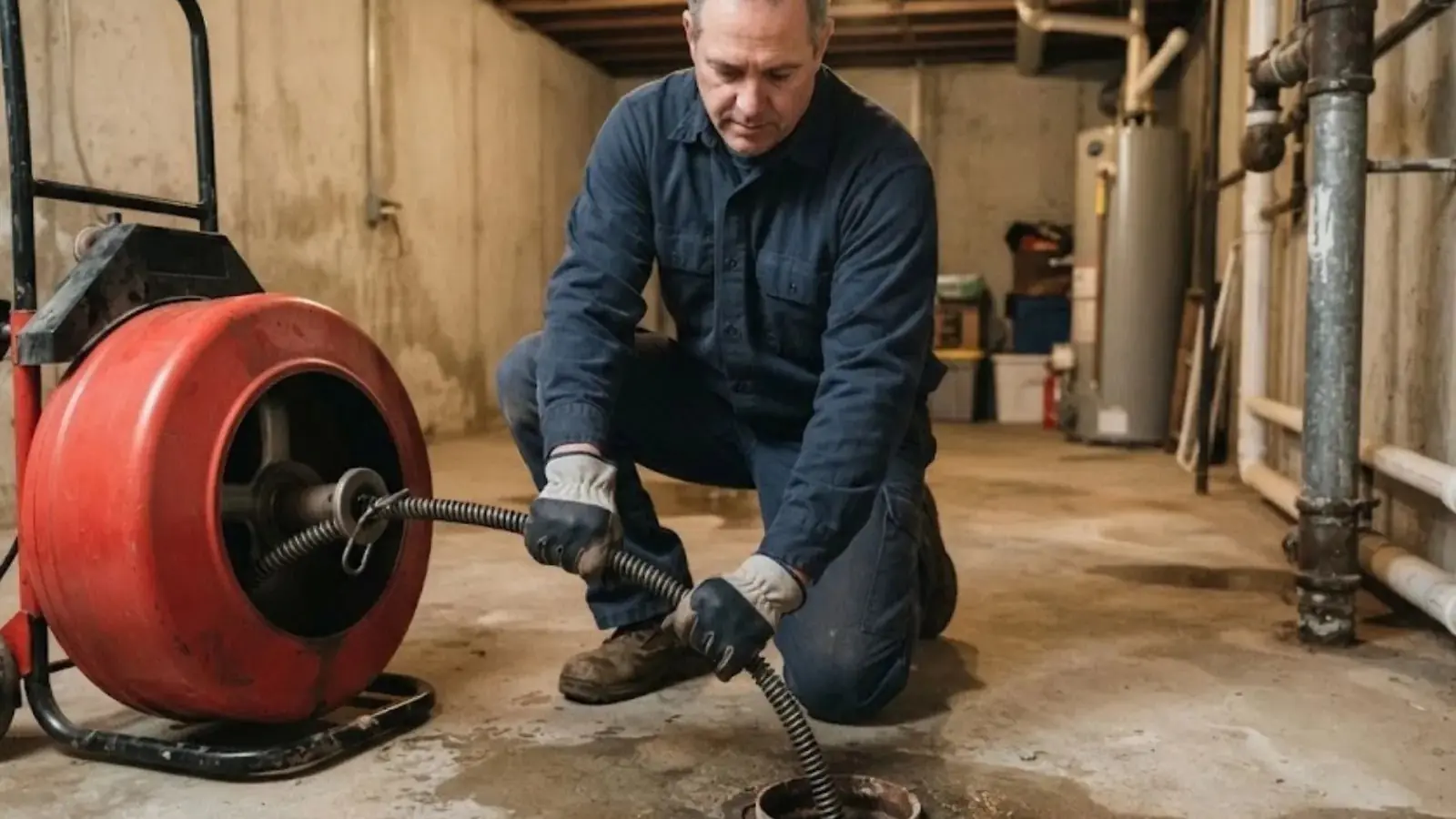
A drain cable, often called a snake, bores through a blockage or hooks it and pulls it out. It is the right tool for hair, a soft food clog or a small obstruction.
Hydro-jetting uses pressurized water to scour the pipe wall, so it suits heavy grease, scale and roots in a larger line. It costs more and is not needed for every job. We start with the lighter tool when it fits and explain the reason if we move up. Read more about hydro-jetting if the same line keeps slowing down.
According to the New Jersey Division of Consumer Affairs plumbing board, the work of opening and repairing drain lines belongs to a licensed master plumber or an authorized plumbing contractor. Employees reported on a W-2 may also do plumbing work. Ask which of those applies before anyone starts.
Source: NJ Division of Consumer Affairs, State Board of Examiners of Master Plumbers FAQ, njconsumeraffairs.gov/plu/Pages/FAQ.aspx
How a drain visit works
- You describe it by phoneWhich fixtures, how long, any smell or noise. Same-day appointments are offered when available, and after-hours calls are taken at any time.
- Technician checks the patternThey run water, listen and look for the cleanout so they know whether to work at the fixture or the main.
- Clear price firstYou hear the price before work starts, and you decide whether to go ahead.
- Clear, then testThe line is cleared and then flushed with water to confirm it runs freely.
Why we go easy on chemical cleaners
Store-bought liquid cleaners are caustic. They can sit in a stopped pipe for hours, soften old fittings and burn skin if the line is cleared by hand afterward. They also rarely clear hair or a solid obstruction, they only thin some of the grease.
If you already poured some in, say so when you call. The technician will wear protective gear and handle the trap with care. A plain plunger and a bucket of hot tap water are safer first tries on a sink that is still draining slowly.
Sewer lines, basements and who is responsible
If the blockage is past your property line, the sewer main belongs to the utility, not to you. In nearby Highland Park, for example, the borough's water and wastewater system is operated by Utility Service Affiliates, a Middlesex Water subsidiary, so a main-line backup there is a call to that operator after a plumber confirms your own line is clear. Our Highland Park page covers that town.
We do not have a sourced answer on who runs the sewer under your New Brunswick street. Ask the city's public works office, and the same question applies in North Brunswick. A technician can check that your own pipe is clear so you can tell the utility what you found.
Source: Middlesex Water, Utility Service Affiliates (Highland Park) page.
What affects the cost of drain cleaning
Many homeowners policies cover sudden damage but not clogs caused by wear or buildup. Ask your insurer what applies to water damage after a backup.
We give you a real number by phone once we know the fixtures and symptoms, and a clear price before work starts.
Frequently asked questions
Yes. Dispatch answers 24/7, including nights, weekends and holidays. Call (732) 466-1098, describe which drains are backing up and keep water use off while you wait. Same-day appointments are offered when available, and overnight calls are taken the same way.
Residue can remain on the pipe wall, or a seldom-used drain trap may have dried out. Running water for a minute refills the trap. If the smell stays, mention it on the call.
We would not rely on it. It can burn skin, damage older fittings and leave a hazard for whoever clears the line next. Tell the technician if you used it.
Look at the pattern. If more than one fixture is slow, or a floor drain or toilet gurgles when other water runs, the main line is the likely problem. A single slow fixture points to its own branch.
Keep grease out of the kitchen sink, use a hair catcher in the tub and run hot water after dishes. Flush only toilet paper. Wipes marked flushable can still snag in the pipe.
Tell us when you call so it can be planned. Our faucet repair page lists what that covers.