
Sewage in the house or no drainage at all
If waste water is backing up into a tub, shower or floor drain, or nothing drains anywhere, treat it as urgent. Our dispatch line is open 24/7, and while you wait you can stop running water, keep children and pets out of the wet area and open a window if the smell is strong.
Do not flush, do not run the washing machine and do not pour chemical drain opener into a line that is already full. Keep your hands off any electrical item or outlet near standing sewage, and shut off power to that area at the panel if it is safe to reach. A gas smell means leave the building and call the gas utility or 911 first.
- Stop all water use, including dishwashers and washers.
- Note which drains back up first. The lowest drain in the house usually shows it.
- Photograph the backup for your insurer before cleanup.
- Call us and say whether one fixture or every fixture is affected.
Why a repair is not the same as a cleaning
A clog and a broken pipe look alike from inside the house. Both back up the lowest drain. The difference shows up when the line is cleared and the backup comes back within days or weeks.
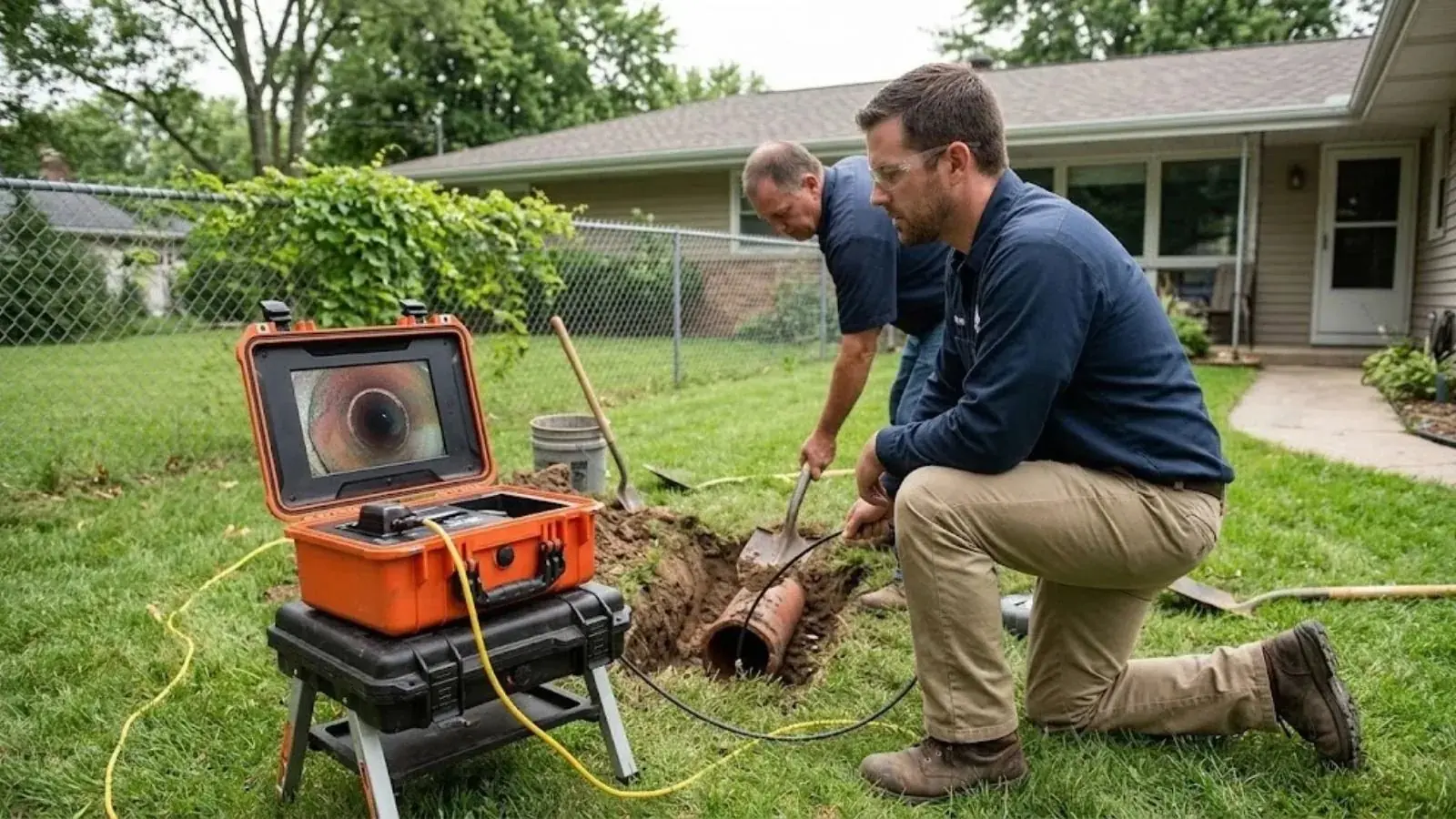
Roots, a sagging section, a joint that has opened and a collapsed wall all keep catching waste after cleaning. That is when a camera run through the line, as described on our sewer inspection page, matters more than another round of snaking.
Repairing a sewer line is plumbing work, and according to the New Jersey Division of Consumer Affairs plumbing board, it may only be done by a master plumber or an authorized plumbing contractor. Ask who will be on your property and who is pulling any permit.
Source: NJ Division of Consumer Affairs, State Board of Examiners of Master Plumbers FAQ, njconsumeraffairs.gov/plu/Pages/FAQ.aspx
Describe what the drains are doing and a dispatcher will tell you what to do next.
(732) 466-1098Spot repair, lining or replacement
| Option | Fits when | Trade-off |
|---|---|---|
| Spot repair | One broken or offset section, rest of pipe sound | Needs digging at that spot only |
| Trenchless lining | Pipe is intact but cracked, rooted or leaking at joints | Needs a pipe that has not collapsed or bellied badly |
| Full replacement | Collapsed, flattened, or failing along its length | Largest job, longest site disruption |
A technician can only recommend one of these after seeing the pipe on camera. Anyone who names the method over the phone is guessing.
What failing pipe looks like
Cast iron
Old cast iron rusts from the inside and builds rough scale that catches paper. Over time it can crack or flake apart.
- Slow drains that return after cleaning
- Rust-colored water or flakes in the cleanout
Clay
Clay pipe comes in short lengths with many joints. Roots find those joints and push them apart.
- Repeated root blockages
- Offset joints visible on camera
Orangeburg
Orangeburg is a bonded fiber pipe that softens and deforms with age. It tends to oval, flatten or collapse rather than crack.
- Sudden drop in drain flow
- A sag or flattened section on camera
We do not assume your pipe type from the age of the street. The camera tells us what you have.
Who owns which part of the line
Many properties have a private lateral running from the house to a sewer main in the street, and where private responsibility ends varies by municipality. Do not assume the rule. Ask the city or your own town's public works office who owns the section under the sidewalk and street, and whether a repair there needs their approval.
In Highland Park, the borough's sewer network is operated by a Middlesex Water subsidiary, so a main-line backup there goes to that operator. If you are across the line in Highland Park or North Brunswick, the same question applies to your own municipality.
Source: Middlesex Water, Utility Service Affiliates, Highland Park page.
Steps from first call to finished repair
- Call and describeTell dispatch which fixtures are backing up and whether any are still draining.
- Camera the lineWe run a camera from a cleanout to see the break, root mass or sag and note how far it is from the house.
- Choose the methodYou get the options from the table above with a clear price before work starts.
- Permit checkAsk the building department whether your repair needs a permit. We help you with that question when you call.
- Repair and retestAfter the repair we run water through the line and confirm it flows.
What drives the cost of a sewer line repair
Homeowners policies often cover sudden pipe failure but not wear, so ask your insurer before work starts. Many sewer backups from slow deterioration fall on the wear side.
We give you a real number by phone once we know what is going on, and a clear price before work starts. Same-day appointments are available when the schedule allows.
Frequently asked questions
Yes. Dispatch runs 24/7, including nights and weekends. If sewage is in the house, call and we will tell you what to shut off and how to keep the area safe while a technician is arranged.
A clog usually clears with cleaning and stays clear. A broken or collapsed line keeps backing up, often in the lowest drain first. A camera inspection settles it.
Sometimes. Lining works in a pipe that is still intact enough to hold a liner. A collapsed or badly sagging pipe usually has to be dug out. We decide after the camera run.
Rules differ by town and we do not guess. Ask the building department in your municipality whether your job needs one before work starts.
That depends on the municipality and sometimes on the utility. Ask your town's public works office where private responsibility ends.
Yes. Keep people and pets away, avoid contact with the water and wear gloves if you must handle anything. Professional cleanup may be needed after the line is fixed.
Policies differ. Sudden failures are sometimes covered and wear is often not. Call your insurer and photograph the damage first.