
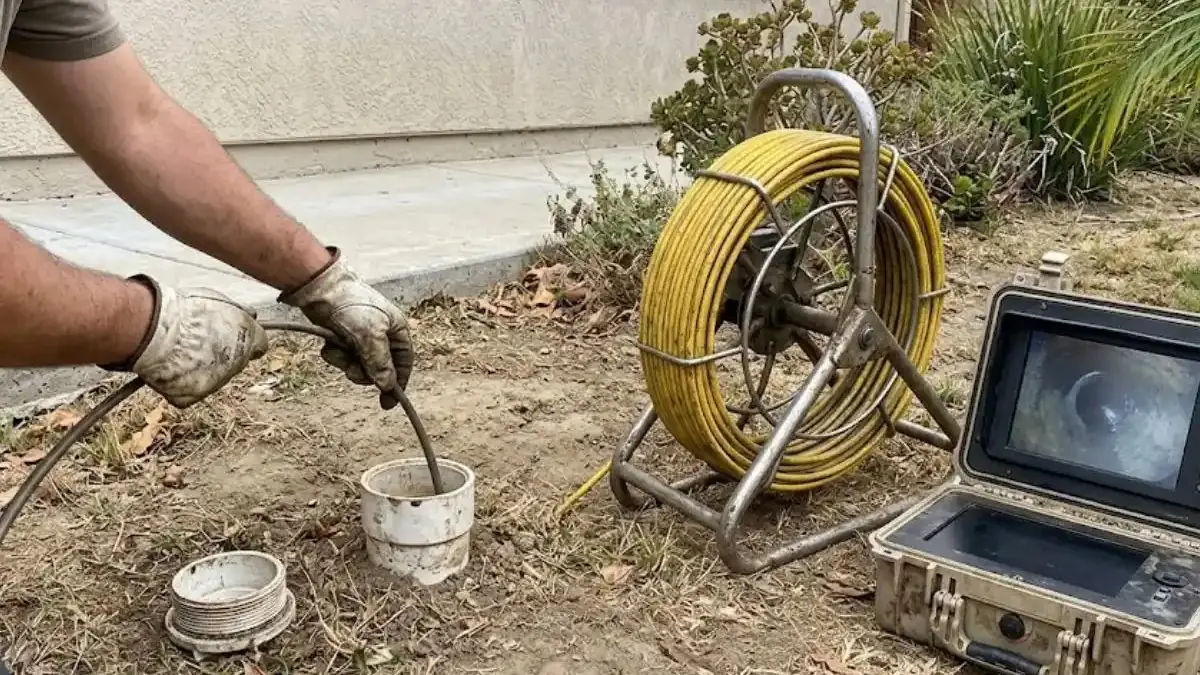
What the camera is for
This is a planned diagnostic visit. A technician feeds a waterproof camera head down the line from a cleanout, a pulled toilet or another access point. The head carries its own light and sends live video to a screen. You can watch it with us and ask us to stop on anything that looks odd.
Most people book one for a reason. The line has clogged more than once, a basement drain smells, a home purchase is pending, or an older house has never had its sewer looked at. Call (732) 466-1098 and tell the dispatcher which of those fits.
What shows up on the screen
Roots
Fine hair-like roots entering at joints look like white or tan threads. Heavy growth looks like a mat that narrows the pipe.
Bellies
A low sag that holds standing water. Waste settles there, so the line clogs again after every cleaning.
Offsets and cracks
Joints that have slipped out of line, or lengthwise cracks. Both catch paper and let soil or water in.
Scale and grease
Cast iron grows rough rust scale inside over the years. Kitchen grease coats clay and plastic and builds up near bends.
Want the inside of your sewer line on video? Call and we will explain the visit and the price first.
(732) 466-1098Pipe material changes what we expect
Older homes often have cast iron, clay tile or a fiber pipe called Orangeburg. Newer lines are usually PVC or ABS plastic. Each fails in its own way. Cast iron scales and rots from the outside, clay breaks at joints where roots get in, and fiber pipe can flatten or peel.
The camera tells us what you actually have, so we are not guessing from the age of the house. We do not claim in advance what we will find. We describe what is common and then show you the footage.
Locating the problem and its depth
The camera head also carries a transmitter. A handheld receiver above ground picks up the signal, so we can mark the surface at the exact spot of a defect and read how deep the pipe lies. That matters because a repair at four feet is a different job than one at nine.
We can mark the line with paint or flags so you can see its route across the yard or driveway. Keep the marks in place until any repair is done, and tell any other contractor about them before they dig.
Buying a house, or inheriting an old one
A home inspector looks at fixtures and visible pipes. They rarely see the buried line from the house to the street. A camera run before closing costs far less than a surprise collapse after it, and the recording gives you something concrete to bring to the seller.
Ask for the video file and a short written summary of what was seen and where. If the footage shows a defect, you can negotiate on facts. If it shows clean pipe, you close with one less unknown.
Who owns which part of the sewer
In Highland Park, the borough's water and wastewater system is run by Utility Service Affiliates, a subsidiary of Middlesex Water Company, and the system includes about 32 miles of sewer main. So a defect out in the street is a utility matter, while the pipe from your house to the main is a separate question. The camera video shows which side a problem is on.
For New Brunswick, Edison and other nearby towns, ask the municipality or the sewer operator where your responsibility ends and what they require before any digging. Our Highland Park service page covers that area, and the Edison page covers the township next door.
Source: Utility Service Affiliates, Inc. (Highland Park) page on middlesexwater.com
How a visit goes
- You call and describe the historyTell us about past clogs, smells, wet spots and the age of the house. Say whether you know where the cleanout is.
- We find an access pointA cleanout is best. If there is none, we may need to pull a toilet or open a vent, and we will say so before starting.
- The camera runs the lineWe run to the street connection or as far as the line allows, and record the footage as we go.
- We mark and explainDefects are marked on the surface, with depth noted. We tell you what the options are in plain terms.
- You get the clear priceIf work is needed, we give a clear price before any work starts. The video is yours to keep.
What drives the price of an inspection
Insurance usually does not pay for a routine look at a healthy line. Some policies cover damage from a sudden sewer backup, and others add that as an extra, so ask your insurer before you assume either way. We can give you the video to support a claim.
We give a real number by phone once we know your access, the line length and the reason for the visit. Call (732) 466-1098.
Reading the footage against what you saw at home
| What you noticed | Common finding | Usual next step |
|---|---|---|
| Slow drains in several fixtures | Roots or heavy buildup in the main | Clearing, then a recheck |
| Gurgling after flushing | Belly or partial blockage | Mark the low spot and plan a repair |
| Damp lawn strip above the line | Cracked or separated pipe | Spot repair, pricing by depth |
| Sewer smell outdoors | Broken joint or open cleanout | Seal or repair the joint |
After the camera
Plenty of inspections end with no repair at all. The pipe is intact and a cleaning schedule is enough. When the footage does show damage, we go over repair, lining and replacement as options and what each means for your yard. See sewer line repair for how those choices compare.
If the line is only clogged, a drain cleaning visit may be all you need. Ask us before booking the camera if you are not sure which one fits.
If the footage leads to a repair, the state plumbing board states that only a master plumber or an authorized plumbing contractor may perform plumbing work in New Jersey. Keep that in mind when you compare repair offers after the inspection.
Source: NJ Division of Consumer Affairs, State Board of Examiners of Master Plumbers FAQ, njconsumeraffairs.gov/plu/Pages/FAQ.aspx
Frequently asked questions
A camera run on its own is generally just a look and does not change the pipe. Any repair or replacement may be different. Ask the New Brunswick building department whether work on your line needs a permit before you schedule digging.
We give a clear price before work starts, after a phone conversation about access and the reason for the visit. Costs depend on the factors listed above, and we will give a real number by phone.
No. The camera goes in through a cleanout or another opening. Digging only comes up if the footage shows damage and you choose to repair it.
Yes. Ask for the footage when you book so it can be recorded and saved. It is useful for a home purchase, an insurance claim or a second opinion.
We offer same-day appointments when available. This is a planned visit, so you can also choose a time that suits you.
Yes. The camera head carries a transmitter, and a receiver above ground lets us mark its route and read the depth.
It is sensible. A camera run shows the buried line that a standard inspection does not reach. You can then decide with real footage in hand.