Sewage is backing up right now
A main line backup is urgent because every drain in the house feeds the same blocked pipe. Our dispatch line runs 24/7, and calling gets a plumber moving. While you wait, stop all water use, keep everyone out of the affected rooms and leave the washer and dishwasher off.
Gurgling floor drains, toilets that bubble when you run the sink, and wastewater rising in the lowest tub or shower are the usual signs of a blocked main. Basement floor drains show it first because they sit lowest on the line.
If the backup has reached outlets, a furnace or the panel, stay away from them. Shut power off only if you can reach the breaker without stepping in water.
- Do not flush toilets or run any tap.
- Keep children and pets away from standing wastewater.
- Wear rubber boots and gloves if you must cross wet floors.
- Do not pour drain chemicals into a main line backup, they sit in the water and burn the next person who works on it.
Sewer backup: what to do first
- Stop adding waterTurn off the dishwasher and washer, hold off on showers, and ask everyone in the house to stop flushing. Each gallon you send down has nowhere to go but back up.
- Find the lowest drainNote which fixtures are affected. If only one sink is slow, it may be a branch clog. If the basement floor drain and the first-floor toilet both act up, the main is blocked.
- Locate the cleanoutLook for a capped pipe, often 3 or 4 inches wide, near where the main leaves the house. Leave the cap on unless a plumber tells you otherwise, because opening it under pressure can release a surge.
- Call and describe what you seeTell the dispatcher what is overflowing, how fast, and whether anyone has used water in the last hour. It helps us decide what equipment to bring.
- Protect what you canLift rugs, move boxes off the floor and open windows for air. Photograph any damage for your insurer before cleanup.
Backup in progress? Call now and we will help you limit the damage while we get a plumber to you.
(732) 466-1098Where the main line runs and where the cleanout is
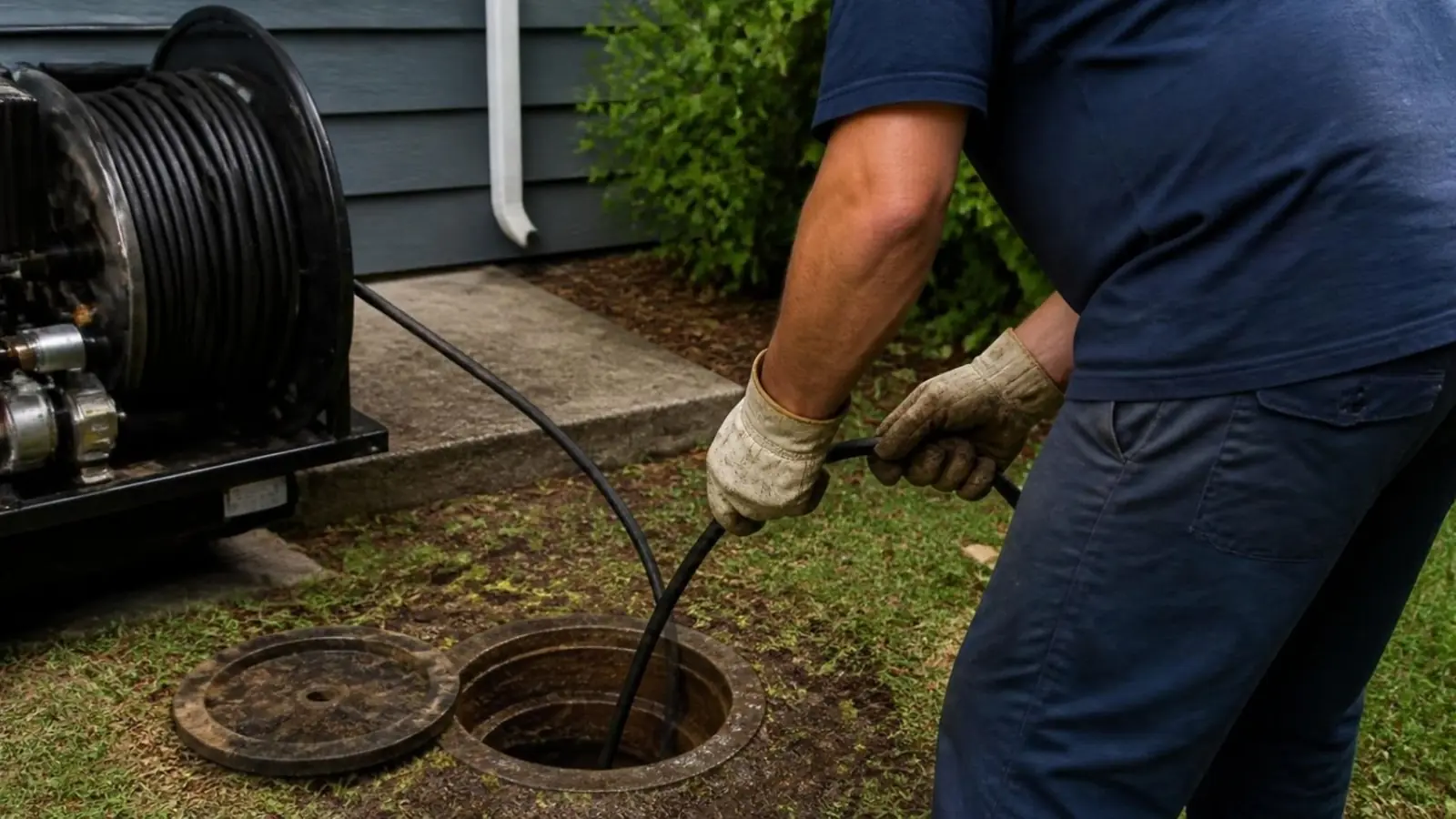
The main sewer line carries everything from your house to the connection in the street or easement. Most homes have a cleanout, a capped access pipe, either in the basement near the foundation wall, in a crawlspace, or outside near the building. It gives a cleaning cable or jetter a straight way into the line.
If you cannot find one, say so when you call. A house without a reachable cleanout is usually cleaned through a toilet or a roof vent, which takes more care and more time. Adding a cleanout is often a sensible follow-up, and it is covered under plumbing installation.
According to the New Jersey Division of Consumer Affairs plumbing board, only a master plumber or an authorized plumbing contractor may perform plumbing in the state. A main line cleaning that involves opening the cleanout or touching house piping falls under that rule, so confirm who will be on site.
Source: NJ Division of Consumer Affairs, State Board of Examiners of Master Plumbers FAQ, njconsumeraffairs.gov/plu/Pages/FAQ.aspx
What actually clogs a main line
Tree roots
Fine roots find joints and cracks and then thicken into a net that catches paper. This tends to repeat, because the roots grow back unless the joint is repaired.
Grease and soap
Kitchen fat cools in the pipe and builds up as a layer. It narrows the bore until solids stop moving.
Wipes and hygiene products
Products labeled flushable often do not break down. They wrap around roots or rough spots and form plugs.
Pipe damage
A sag, an offset joint, or a collapsed section holds water and debris. Cleaning clears it for a while, but only a repair fixes it.
Cable, jetter or camera first
| Method | Best for | Limit |
|---|---|---|
| Cable machine | Soft clogs, paper, light root hairs | Pokes a hole and may leave a coating of grease |
| Water jetting | Grease, heavy buildup, scale on the pipe wall | Needs a cleanout or access point. See hydro jetting |
| Camera inspection | Repeat clogs, unknown pipe condition | Shows the problem but does not clear it |
On an active backup we clear the line first, then look. Once water moves again, a camera run shows whether you had a one-time clog or a pipe that will block again.
Who owns which part of the line
In general the pipe from your house to the property line is the owner's responsibility, and the main in the street belongs to the sewer operator. New Brunswick sewer operation and any combined sewer details are not something we can state here, so ask the city or your sewer operator who maintains the main on your street.
In Highland Park, the borough's water and wastewater system is run by Utility Service Affiliates, a Middlesex Water subsidiary, so a backup in the street main there goes to that operator. If you live near the border, our Highland Park service page explains how we handle calls there.
Source: Middlesex Water, Utility Service Affiliates Highland Park page
How we judge whether it will come back
After the line runs clear, we look at what came out. Roots on the cable point to a joint problem, while grease and paper point to habits or a rough spot. How fast the line backed up last time also matters, since a clog that returns within weeks is rarely just a clog.
If the camera shows a broken or sagging pipe, cleaning is a stopgap and the next step is sewer line repair. If the pipe is sound, regular cleaning and a few kitchen habits are usually enough.
What affects the cost of a main line cleaning
Homeowners policies usually cover sudden water damage from a backup only if an endorsement is in place, and often not the cleaning itself, so ask your insurer before you rely on it. We give a clear price before work starts. Call (732) 466-1098 for a real number based on what you describe.
Frequently asked questions
Yes. Dispatch runs 24/7, so a backup at 2 a.m. on a Sunday gets the same attention as one on a weekday afternoon. Call (732) 466-1098, describe which drains are affected, and we will tell you what to do until the plumber arrives.
Same-day appointments are offered when available, and we are licensed and insured.
One slow sink or tub is usually a branch clog. If several fixtures are slow, a toilet gurgles when you run water elsewhere, or the lowest floor drain backs up, the main is the likely culprit.
No. Chemicals do not reach a clog deep in the main, they sit in standing water and can burn skin and damage pipe. Leave the line alone and call.
Usually yes if you stay out of the wet rooms and stop using water. Sewage carries bacteria, so keep children, pets and anyone with a weak immune system away. If the smell is strong, ventilate and call us.
Not usually. Cutting roots clears the pipe, but they grow back through the same joints. A camera inspection shows how bad the entry points are and whether repair makes sense.
Policies differ a great deal. Many exclude backup unless you added a specific endorsement, so read yours or call your insurer before cleanup starts.