
Who this page is for
This is a planning guide for new construction, a fuel conversion, an upsize, a move to a different room or a first install in a renovated space. Nothing here is urgent, so take the time to get the choices right.
If a tank is leaking or you have no hot water today, the water heater replacement page is the better starting point. For a clear price on a planned install, call during the day and we can book a same-day appointment when available.
Choosing a size
Capacity should match how your household uses hot water, not how large the old tank happened to be. Count bathrooms, adults who shower in the morning and whether a dishwasher and washer run at the same time. Two people in a small apartment rarely need what a family of five does.
Look at the rating label on your current unit for its capacity and recovery. Read both to us on the phone. An undersized heater runs out mid-shower, and an oversized one costs more to buy, heat and fit into the space.
Ready to price an install? Call and we will ask a few questions about your space and fuel.
(732) 466-1098Gas, electric or heat pump
Switching fuel is the biggest change you can make, because it affects the gas line, the vent and the electrical panel all at once.
Gas
Fast recovery and common in homes with a gas meter. Needs a vent, combustion air and a correctly sized gas line.
Electric
No flue, simple placement. Needs a dedicated circuit sized for the heater's elements, so panel capacity matters.
Heat pump
Pulls heat from surrounding air to save energy. Needs room around it, a condensate drain and a space that stays above freezing.
Tankless
Heats on demand and takes little floor space. Needs larger gas supply or electric service. See the dedicated tankless page.
Venting, gas line and electrical
A gas water heater must vent combustion gases outside through a flue or vent sized for that model. The gas line also has to supply enough volume for the burner, and an older line sized for a smaller appliance may be too small. These are checked on site, not guessed from a phone call.
If you are converting from gas to electric, the panel needs space and capacity for a new circuit. If you are moving to a heat pump unit, the room needs air volume and a place to drain condensate. If you are adding a bathroom or kitchen, ask about plumbing installation planned at the same visit.
Expansion tank, pan and drain
When water heats it expands. On a closed system, with a check valve or backflow device on the supply, that pressure has nowhere to go, so an expansion tank is commonly added. Ask what the technician sees on your supply before assuming one is needed.
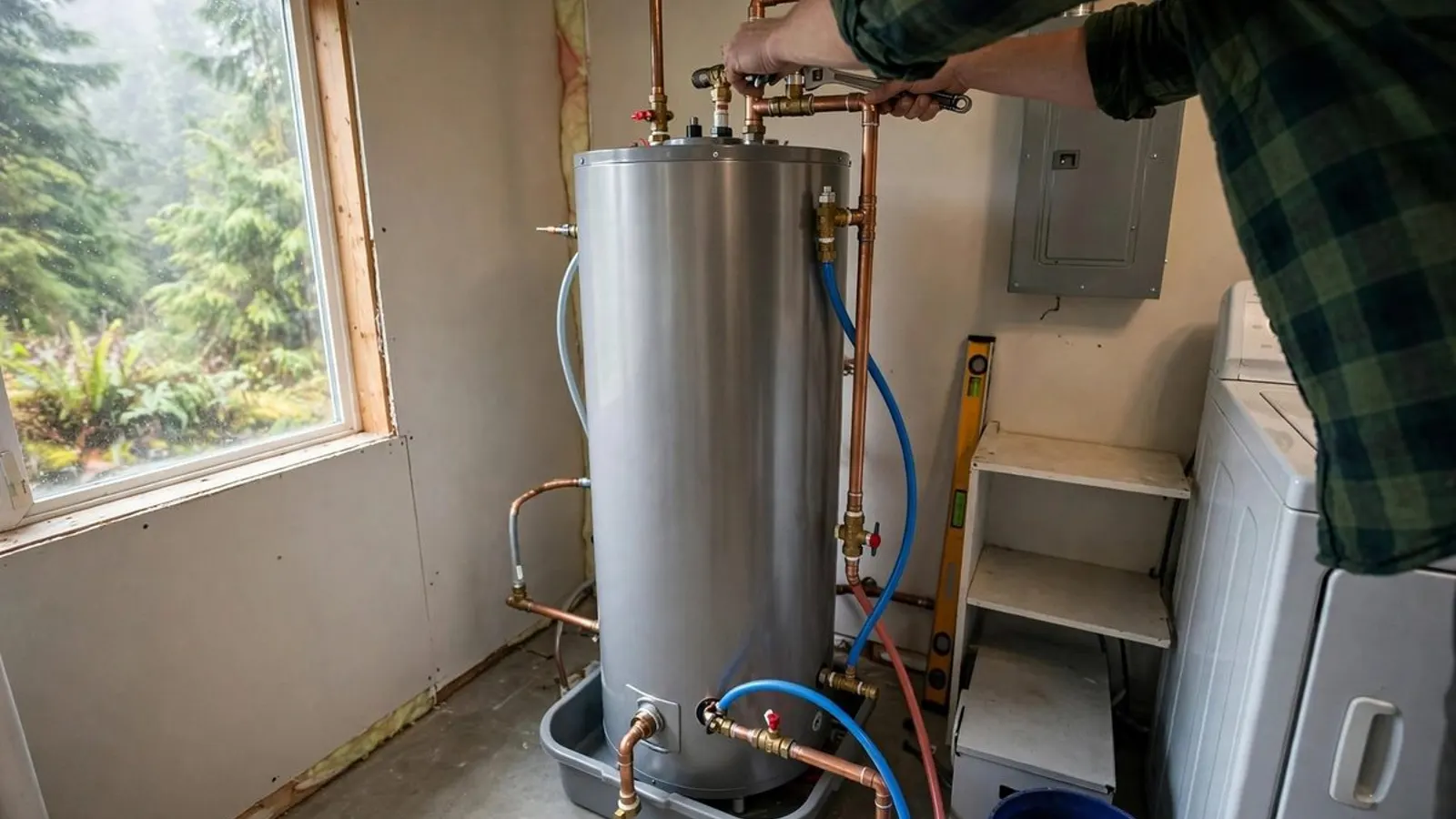
A drain pan under the tank with a pipe to a safe spot catches slow leaks before they stain a floor. The relief valve discharge pipe should run downward to a visible, safe location. If the heater sits above living space or a finished basement, the pan matters even more.
Permits and inspection
Whether a water heater install needs a permit and inspection is set by your municipality and the state code, and we do not have a sourced rule to quote you. Ask the building or construction office in your town before the job, and tell us what they say so the visit is scheduled correctly.
The same question applies across the area. Homeowners in Highland Park and Piscataway deal with their own local offices, so do not assume one town's answer holds in another.
Replacing an existing water heater with a new one of like capacity counts as minor work, according to the state Department of Community Affairs code alert. A permit is still required, and work may begin once notice is given to the local enforcement agency, so ask your town office how it handles that notice.
Source: NJ Department of Community Affairs code alert on 2018 Uniform Construction Code changes, nj.gov/dca/codes/alerts/pdfs/OM_MW_03052018.pdf
Getting ready for install day
- Clear the spaceMove stored items at least an arm's length back from the heater and the path to it.
- Find the shutoffsKnow where the main water valve and, for gas, the gas shutoff are. Tell us if either is stuck.
- Plan for no hot waterThe supply is off for part of the visit, so schedule it when no one needs a shower.
- Note accessTight stairs, low ceilings and parking affect how the old tank comes out.
What shapes the cost
Homeowners policies generally cover sudden, accidental damage and not routine upgrades or wear. Ask your insurer what applies if you are replacing a unit because of a leak.
Call us and we will give a real number by phone after a few questions, and a clear price before any work starts.
Frequently asked questions
That depends on the municipality and state code, and we cannot quote a rule we have not verified. Call the building or construction office for your address and ask whether a permit and inspection are required. Tell us the answer so the job is planned around it.
After you describe the space, current unit and fuel, we give a number by phone. On site, the technician confirms the details and gives the final price before they begin. You can say no at that point.
Often yes, but it is a bigger job than a like-for-like swap. Gas needs a vent and gas line, electric needs panel capacity, and each affects what the work involves.
Base it on the number of people, bathrooms and how many fixtures run at once. Read us the capacity from your current label and the technician will compare it with how you use hot water.
Plan on the supply being off for part of the visit. A like-for-like swap is shorter than a fuel conversion. The technician can tell you more once they see the space.
Yes, and the choice involves gas supply, venting and flow needs. Our tankless water heater page explains those tradeoffs.
Planning ahead gives you time to compare options and pick a day. Look for rust at the base, water around the tank and heat that takes longer to arrive.