First, stop adding water and stay out of it
If a floor drain is bubbling or overflowing, treat it as urgent. Our line is open 24/7, and you can call while you work through the steps below. Do not wait for the water to stop on its own, because a backed-up main line tends to keep filling.
Stop running water anywhere in the house. That means no flushing, no showers, no dishwasher and no laundry. Every drop you send down the pipe has nowhere to go but out of that drain.
While you wait, move belongings off the floor and take photos of the water level and any damage. Those photos help with an insurance claim and give the plumber a sense of how fast the water is rising.
- Stop all water useAsk everyone in the house to stop using toilets, sinks, tubs and appliances until the drain is cleared.
- Shut off power to wet areasIf water is near outlets, a furnace, a water heater or a panel, do not step into it. Switch off the power only if the breaker panel is dry and you can reach it safely. Otherwise call for help.
- Keep people and pets outSewage carries bacteria. Keep children and pets away, wear rubber boots and gloves, and wash your hands well after any contact.
- Do not pour in chemical cleanerDrain chemicals can burn skin, damage pipes and are dangerous for a plumber who has to work in the standing water afterward.
- Smell gas? LeaveIf you smell gas anywhere in the house, leave the building and call the gas utility or 911 first.
Why a floor drain backs up
A floor drain connects to the same sewer system as the rest of the house, often through the lowest pipe. When something blocks the way out, the floor drain is where the water surfaces, because it sits lower than the toilets and sinks above.
The cause is either local, in the branch that serves the drain, or shared, in the line that carries the whole house's waste out. The table lists the common patterns and what each one suggests.
| What you see | Likely cause | Best next step |
|---|---|---|
| Only the floor drain gurgles, nothing else is slow | A blockage in the floor drain branch, or debris in the trap | Stop water use and have the branch cleared |
| Drain backs up when the washing machine drains | The laundry line shares a pipe with the floor drain | Avoid laundry and call for a camera check |
| Toilets and tubs upstairs are slow too | A main sewer line blockage | Stop all water use and call for a main line cleaning |
| Backs up after heavy rain | Water entering the sewer system or groundwater overload | Call to talk through backwater valve and sump options |
| Repeated backups after cleaning | Roots, a broken pipe or a belly in the line | Ask for a sewer camera inspection |
Roots, grease, wipes and collapsed pipe sections are common culprits in main lines. We cannot tell you which one you have from the floor, which is why a camera look is worth asking for when the problem comes back.
Water still coming up? Call now, and we can dispatch day or night, 24/7.
(732) 466-1098When it is the main sewer line
The signs of a main line problem are simple. More than one drain is affected, the toilet bubbles when another fixture drains, and the floor drain is the first place water appears. In that case, a local snaking of the floor drain alone will not hold.
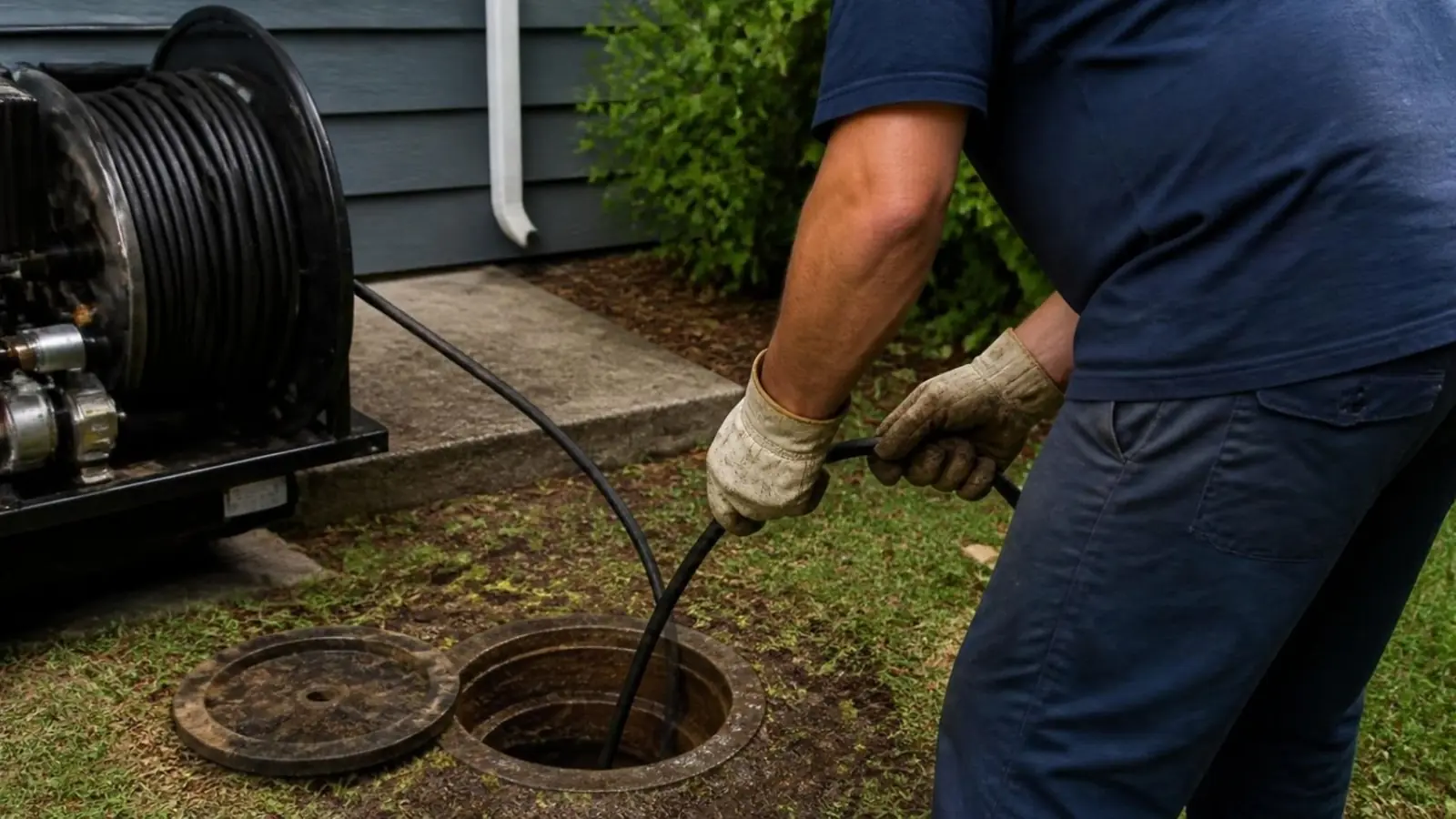
A sewer line cleaning visit clears the main line, and a camera look afterward shows whether the pipe is damaged. If the pipe is cracked or collapsed, cleaning is only a short term fix and repair becomes the real conversation.
One quick test helps. With your plumber on the phone, note which fixtures act up when others run. A toilet that bubbles when the washer drains, or a tub that gurgles when the floor drain rises, tells them where in the pipe to look first.
According to the New Jersey Division of Consumer Affairs plumbing board, hands-on sewer and drain plumbing is reserved for a master plumber or an authorized plumbing contractor. A homeowner can stop adding water and keep the area clear, but the line itself is not a do-it-yourself job.
Source: NJ Division of Consumer Affairs, State Board of Examiners of Master Plumbers FAQ, njconsumeraffairs.gov/plu/Pages/FAQ.aspx
Who maintains the sewer, and who do you call?
We have not verified who operates the sewer lines in New Brunswick or where the property line responsibility changes. We are not going to guess.
The practical step is to ask the New Brunswick public works or utilities office who maintains the sewer main in your street and where your responsibility for the lateral ends. Ask also whether the city handles any backups on the public main, and whether they want to be notified.
If several neighbors are seeing the same backup, report it. It may point to a blockage in the public main and not in your house pipe.
Source: not verified. Ask the New Brunswick building department or public works office.
Cleanup and what comes after
Standing sewage is a health risk. Porous materials such as carpet, cardboard and drywall that soaked up sewage are usually not salvageable. Hard floors can often be cleaned and disinfected. Wear gloves and boots, and ventilate the room if you can do so safely.
Call your insurer early, because coverage for sewer backup often depends on an extra endorsement and not on a standard homeowners policy. Ask what applies before you throw anything out, and photograph the damage first.
Costs for clearing a backup depend on how far the blockage sits, how accessible the cleanout is, the equipment needed and the time of day. For a real number, call us, describe what you see, and ask for the price in writing before work starts.
Keeping it from happening again
Keep wipes, grease, hygiene products and paper towels out of the drain, even if the label says flushable. They are among the most common reasons main lines clog. If roots are the issue, expect repeat visits unless the pipe is repaired.
A backwater valve, a clean floor drain trap and a working sump pump are the main defenses for a basement. Ask the plumber what suits your pipe layout before you buy anything.
We serve homes in North Brunswick and Highland Park as well as New Brunswick, and a floor drain in any of those basements behaves the same way when the main line backs up.
Frequently asked questions
It can be. Sewage carries bacteria and viruses, so avoid skin contact, keep children and pets away and wear boots and gloves when you handle cleanup.
Heavy rain can overload the sewer system or raise groundwater, which pushes water back toward the lowest drain. A backwater valve or sump work can help, so ask the plumber.
We advise against it. Chemicals rarely clear a main line blockage and they make the standing water hazardous for anyone working on it afterward.
Yes. Our dispatch line is open 24/7, and same-day appointments are available when schedules allow. Call (732) 466-1098, stop water use and tell us what you see.
If only your house is affected, the blockage is usually in your line. If neighbors have the same problem, tell the city. A camera inspection helps locate the blockage.