Stop the water before anything else
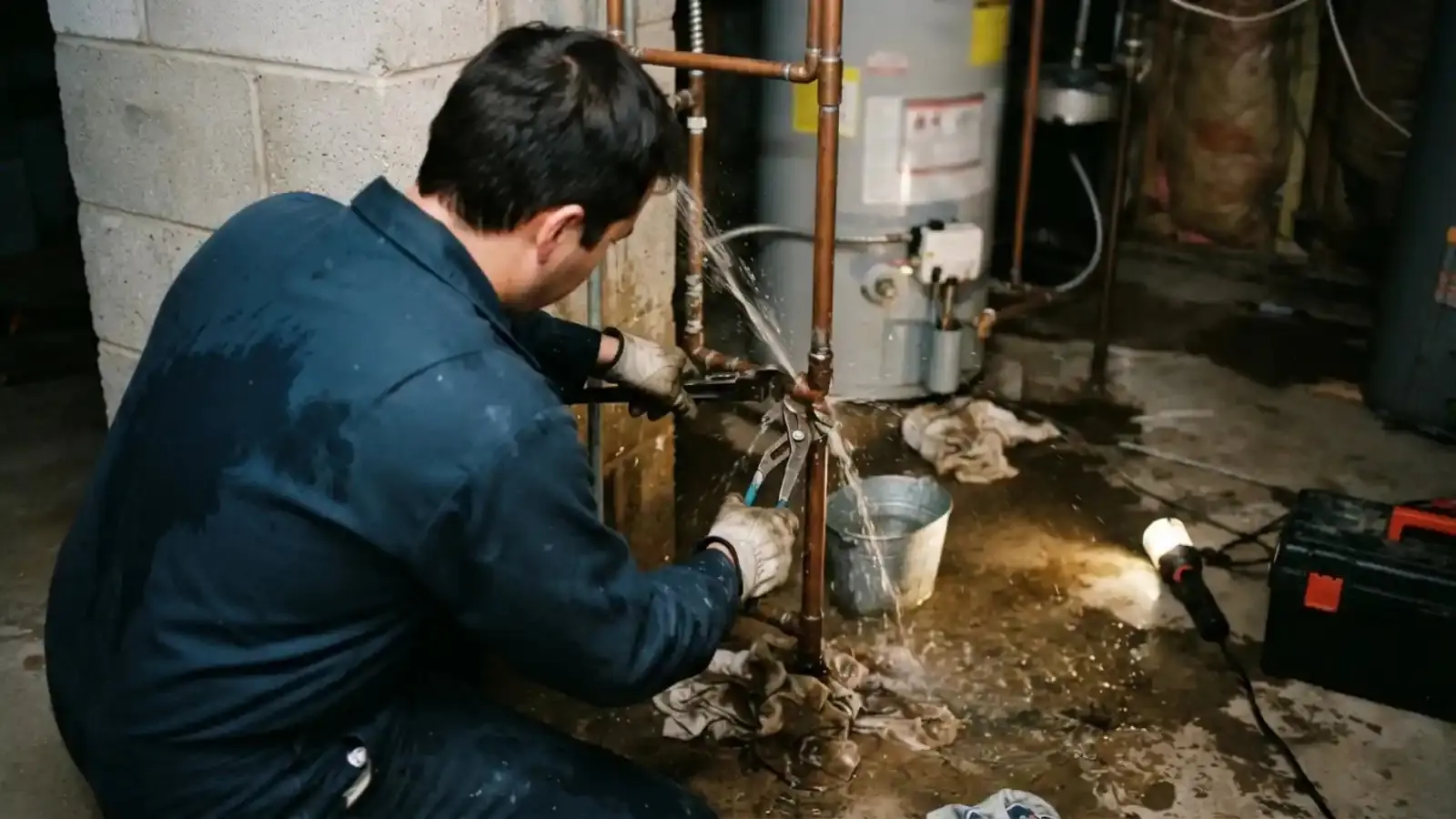
A burst pipe will not wait for a convenient hour, and neither do we. Our dispatch line runs 24/7 at (732) 466-1098, and while you wait for a plumber there is plenty you can do to keep the damage small.
Work through these steps in order. Stop at any step where you feel unsafe, and call 911 if water is near electrical panels or you smell gas.
- Find the main shutoffIt is usually where the water line enters the house, often in a basement, utility room or near the water heater. Turn it clockwise until it stops. Some are a round wheel, some are a lever that sits across the pipe when closed.
- Open the lowest and highest tapsOpening a tap upstairs and one at the lowest point lets trapped water drain out. This takes pressure off the damaged section and slows the leak.
- Shut off power to wet areasIf water is reaching outlets, appliances or the panel, turn off the breaker for that area only if you can reach it without stepping in water. If you cannot, leave it and call for help.
- Turn off the water heaterWith the cold supply closed, an electric heater can overheat if it runs empty. Switch off the breaker, or set a gas unit to pilot or off.
- Contain and photographMove rugs, boxes and electronics out of the wet zone. Use buckets and towels, then take clear photos of the damage before cleanup for your insurer.
What a burst pipe usually looks like
Not every break is a fountain. Many show up as a stain spreading on a ceiling, a wall that feels cold and damp, or a floor that suddenly sounds wet underfoot. A sudden loss of pressure or a meter that spins with every tap closed also points to a break somewhere behind the walls.
Cold weather causes plenty of splits, because water expands as it freezes and stresses the pipe wall. The actual burst often shows up after the thaw, when ice melts and water finally flows through the crack. Corrosion, a failed fitting and a loose joint can do the same at any time of year.
Water still running? Call (732) 466-1098 and we will dispatch day or night.
(732) 466-1098Know your shutoffs before a burst
Our notes do not include a verified name or shutoff rule for the New Brunswick water supplier, so we will not guess. Check your latest water bill for the provider and phone number, and ask whether the street valve is something only the utility may operate.
Next door, North Brunswick's water comes from a township utility, so a customer there calls the township for service on the street side of the meter. If you live in that town and a break is on the main under the road rather than in your house, North Brunswick residents should call the utility first. Edison and other neighbors should check their own bill the same way, and our crews work in Edison as well.
Source: North Brunswick Township 2022 water quality report
Frozen pipe or burst pipe, which are you facing
A pipe that is frozen but not yet split is a warning. A tap that gives only a trickle in freezing weather, with frost on the pipe or no flow at all, tells you ice is blocking the line. Shut the main valve and call before the thaw, because that is when many splits start leaking.
| What you see | Likely situation | What to do first |
|---|---|---|
| Faucet dry or a trickle in a cold snap | Ice blockage, pipe may be cracked | Close the main valve, keep heat on, call a plumber |
| Water spraying or dripping from a pipe | Active break or failed joint | Close the main valve, open taps, call now |
| Damp ceiling or wall stain spreading | Hidden leak or split behind a surface | Close the main valve, photograph, call now |
| Meter moves with all fixtures off | Leak somewhere on the line | Check visible pipes, close the main, call |
Water damage in the first day
Standing water and wet drywall can start to grow mould quickly, so drying matters as much as the repair. Open windows if the weather allows, run fans and a dehumidifier if you have one, and pull up soaked rugs. Do not turn on ceiling lights under a wet ceiling.
If a ceiling is sagging with trapped water, stay out from under it. A plumber can often release that water in a controlled way, but a sudden collapse is a real injury risk.
Know where your responsibility starts. According to New Jersey American Water, the company maintains the service line from the main to the curb stop, and the customer maintains the pipe from there to the building. That describes its service areas only, so check your own utility before you assume a break past the curb is yours or theirs.
Source: New Jersey American Water, customer rights and responsibilities, amwater.com/njaw/customer-service-billing/rights-responsibilities
What the plumber does once on site
The first job is to confirm the water is off and find where the line actually failed. Then comes the repair itself. For a clean split in accessible copper, that may mean cutting out the damaged length and fitting new pipe. If the pipe is corroded in several places, the sensible fix may reach further than the burst.
A plumber may need to open a wall or ceiling to reach the break. If you suspect a hidden leak that is not obviously burst, leak detection helps find the exact spot before anything is cut open.
What shapes the repair cost
We do not quote numbers in a blog post, because no honest figure fits every pipe. These are the things that move the price.
Many homeowners policies cover sudden pipe failure but not wear and tear, so ask your insurer what applies to your policy. We give a clear price before work starts, and you can get a real number by phone once we know what you are dealing with.
Repair, partial replace or repipe
The right choice depends on how much of the system is tired, not only on the break.
Spot repair
Best when a single section failed and the rest of the pipe looks sound. Quick and the least disruptive.
Section replacement
Suits a corroded or repeatedly leaking run. Replacing the whole stretch avoids another leak a few feet away.
Larger scope
If several failures have turned up, ask about repiping so you are not paying for patches again and again.
Frequently asked questions
Yes. Dispatch runs 24/7, and same-day appointments are offered when available for less urgent leaks. Call (732) 466-1098, close your main valve, and we will tell you what to do while you wait.
Usually yes. If the cold supply is closed, a heater can overheat as it drains. Switch off an electric unit at the breaker or set a gas unit to off, and leave it that way until the repair is done.
Homeowners policies often cover sudden pipe failure but not damage from wear or long neglect. Ask your insurer before you start repairs, and keep your photos and any written plumber notes.
A rubber and clamp patch or repair tape can slow a small leak, but treat it as temporary. Closing the main valve is the real fix until a licensed and insured plumber repairs the line.
Look for a damp patch, peeling paint, a musty smell or a meter that keeps moving with every fixture off. Those signs point to hidden water, which is worth tracing before you cut into a surface.