
Why one clog costs more than another
A plumber's price follows the work. A bowl that clears with a few strokes is a short visit. A toilet that has been blocked for days, or one that backs up again the next morning, can mean a lot more tools, time and troubleshooting.
Nobody can see inside your drain from a web page, and a plumber cannot either until the work starts. That is why a flat figure from a search result rarely matches your house. We do not list prices in a blog post. Ask for a written price before work starts and compare it against the factors below.
The five things that set the price
Ask what the price includes before work starts: a seal, a camera look, cleanup. We give a clear price before work starts and can talk through likely factors by phone.
If a toilet has to be replaced, the state rules are simple. According to the New Jersey Department of Community Affairs, swapping in a similar toilet with no change to the piping needs no permit, though the new fixture must still meet code.
Source: NJ Department of Community Affairs code alert, nj.gov/dca/codes/alerts/pdfs/OM_MW_03052018.pdf
Want a real number for your toilet? Call (732) 466-1098 and describe what you see.
(732) 466-1098Clog types compared
Use this table to see where your problem probably falls. It is a guide to the work involved, not a diagnosis.
| Situation | Typical approach | What drives the cost |
|---|---|---|
| Bowl rises slowly, then clears with a plunger | Plunge, check the flush | Short visit, little equipment |
| Water will not go down after plunging | Closet auger through the trap | More time and a specialist tool |
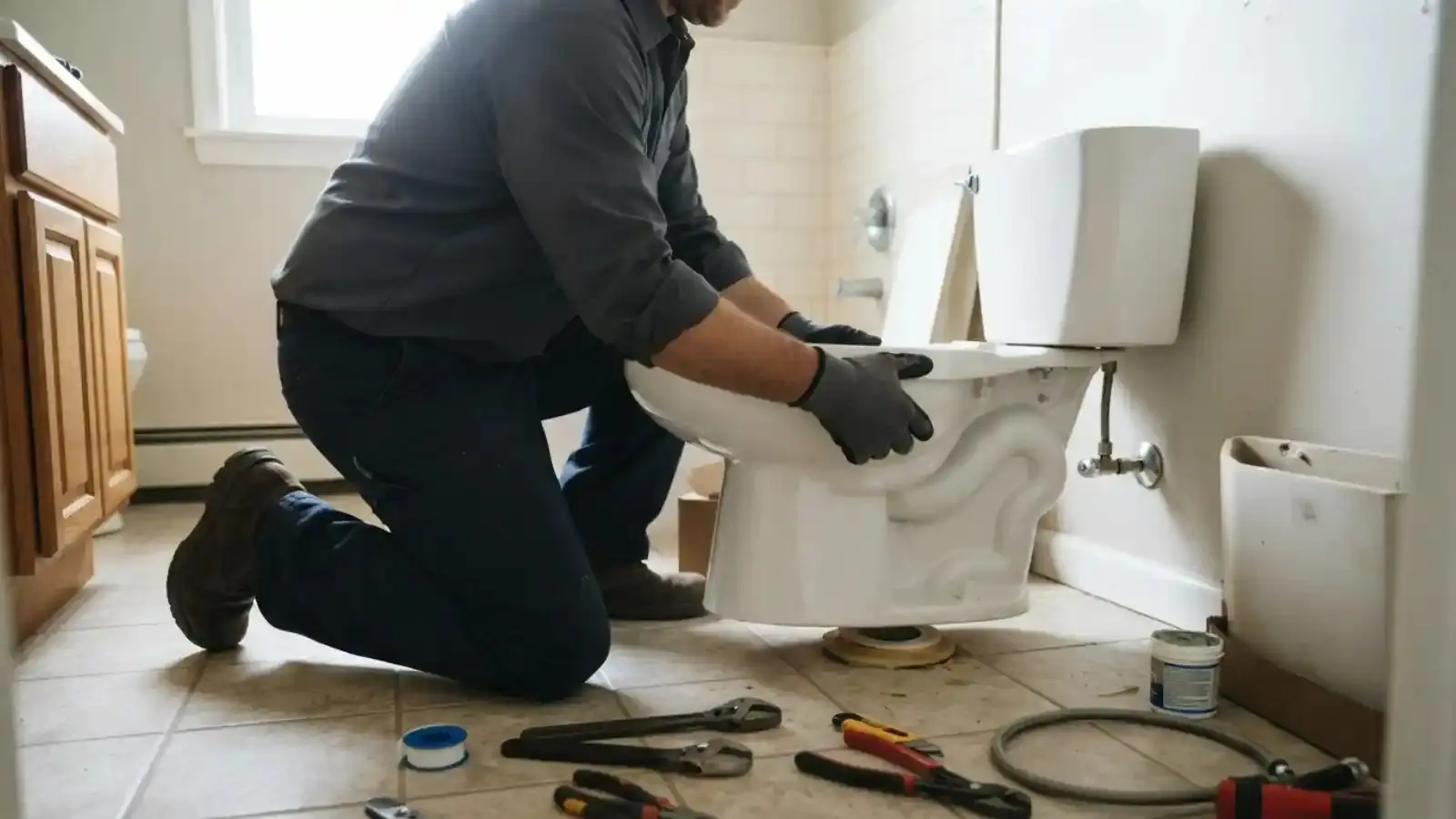
| Repeated clogs in the same toilet | Pull the toilet and inspect the outlet | Labour, a new seal, possible hidden object |
| Toilet gurgles when a tub or shower drains | Look at the drain line behind it | Machine work or a camera, larger scope |
Do this before the plumber arrives
A few safe steps can limit mess and sometimes save a call.
- Lift the tank lid and close the fill valve, or turn the angle stop at the wall clockwise, if water keeps rising.
- Do not flush again. A second flush on a blocked toilet usually sends more water to the floor.
- Stand out of any water on the floor near outlets or a wet-vac. Never touch electrical items standing in water.
- Use a flange plunger, not a cup plunger, and push slowly to avoid splashing.
- Skip chemical drain cleaners in a toilet. They rarely work on a bowl and can burn a plumber's skin later.
Who owns the sewer in your town
In Highland Park, the Borough's water and wastewater system is run by Utility Service Affiliates, a subsidiary of Middlesex Water Company, and the Borough owns the sewer collection network. So if a backup comes from the main under the street rather than your own pipe, that is a utility question, not a plumber's job.
We have no verified sewer authority for New Brunswick in our notes, so ask the city or your landlord who handles the public main. If you live in Highland Park, call the operator when the problem is outside your property line.
Source: Middlesex Water Company Highland Park system page
What happens on a typical visit
The plumber first asks what you saw. How long has it been blocked, did anything fall in, and are other fixtures slow? Those answers decide which tool comes out first and save time that would otherwise show up on the bill.
Next comes the clearing itself, then a test flush or two to confirm the water leaves properly. If the bowl clears but the flush still looks weak, a partly blocked trap or rim holes may be the real issue, and that is a separate conversation about the toilet itself.
Expect honest talk about what was found. A good plumber tells you whether the clog was a one-off or a sign of something that will return.
If the visit ends in a new toilet instead of a clear drain, the state Department of Community Affairs code alert says a similar fixture with no piping change needs no permit or inspection. Adding a brand new fixture is different and does need one.
Source: NJ Department of Community Affairs code alert on 2018 NJ Register changes, nj.gov/dca/codes/alerts/pdfs/OM_MW_03052018.pdf
How to read a written price
Whatever number you are given, make sure it answers these questions.
- Does it cover clearing the clog only, or also a camera look if the first tool does not work?
- If the toilet has to come off the floor, is the new seal and reset included?
- Is there a different rate for after-hours work, and does it apply to your call?
- What happens if the clog returns within a few days, and who decides what counts as a repeat?
- Is cleanup of any spilled water part of the visit?
How to avoid paying twice
Many repeat calls come from treating the symptom. If the toilet clears and then blocks again, the first fix did not reach the cause. Ask the plumber what they found and whether anything else on the line is slow.
Wipes sold as flushable, paper towels and cotton products are common culprits, and so are toys and too much paper at once. Keep a small bin in the bathroom and tell children that only waste and toilet paper go down. If more than one fixture is slow, drain cleaning on the shared line may do more good than another visit to the bowl.
When the clog sits behind the toilet
A toilet that gurgles, a tub that bubbles when you flush or a basement floor drain that rises together point to a deeper blockage. Watch for sewage smell and for water that appears at the lowest fixture first.
That is a different job from a single bowl, and the price follows. If you see it, stop using water and call. Neighbors in nearby Piscataway call us for the same reason: it is the line, not the toilet.
Frequently asked questions
Yes. Dispatch runs 24/7, and same-day appointments are available when schedule permits. After-hours calls are priced differently, so ask for the price before the plumber starts.
Companies include different things: a seal, a camera look, cleanup, or a follow-up visit. Ask what is in the written price, and compare like with like.
A low number that leaves out the reset or the second tool can end up higher than a clear price that covers them.
Plain clogs are usually a maintenance cost, not an insured event. If a backup damages floors or walls, ask your insurer whether that damage is covered.
Rarely. Chemicals sit in the bowl, can damage seals and make the job riskier for whoever works on it next. A plunger is safer.
If you already poured something in, tell the plumber. It changes how they handle the water in the bowl.
If the toilet keeps clogging or other drains are slow, yes. A camera shows whether the cause is the toilet outlet or something further down the line.
It adds time to the visit, so ask whether it is part of the written price or an added step if the first tool does not solve things.