
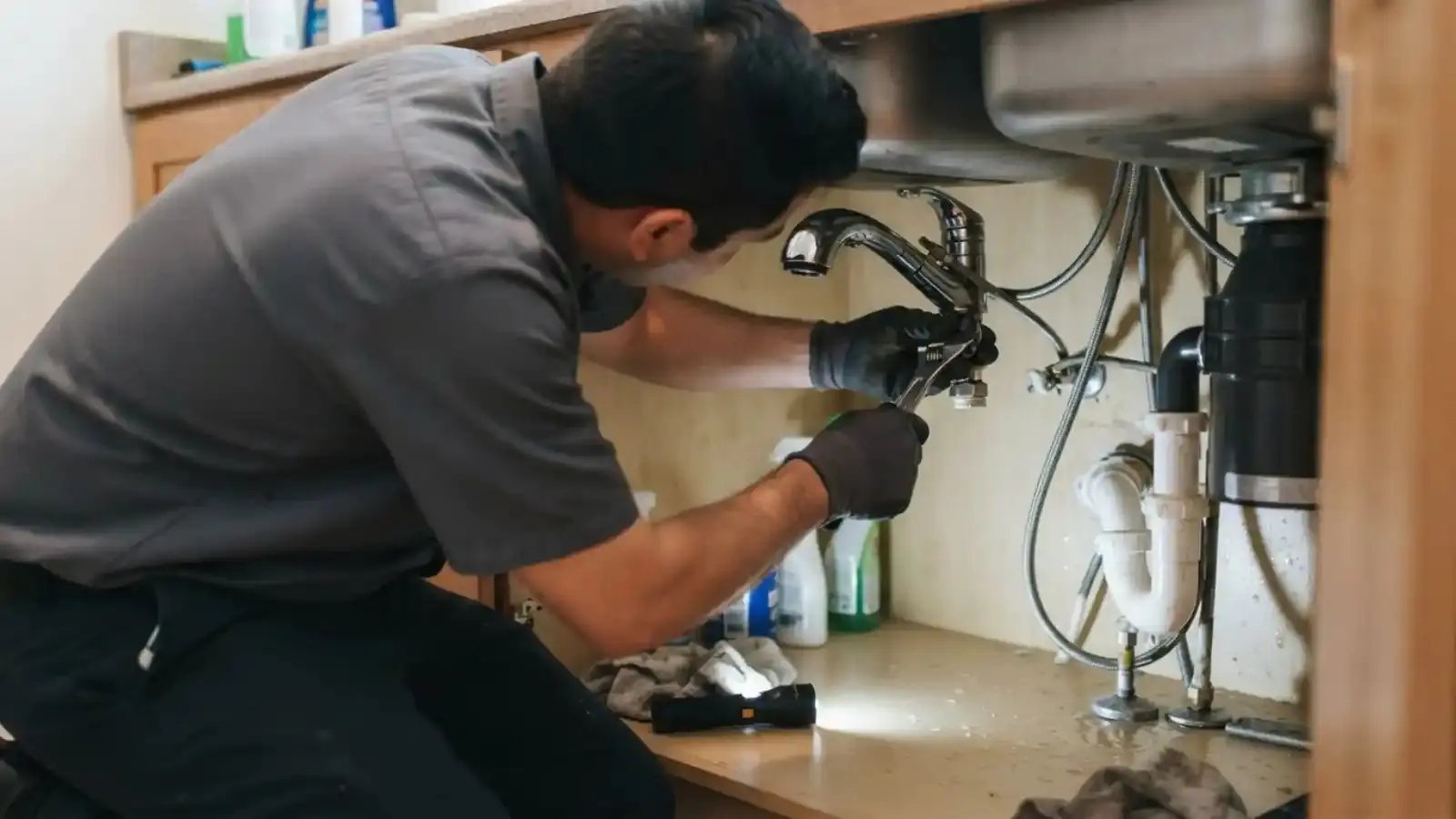
Water sitting in the basin and no obvious plug
You pull the stopper, look down the drain, and see nothing. No food, no hair, no grease plug. Yet the basin takes a full minute to empty and the last inch of gray water lingers. Plumbers hear this one all the time, and the answer is rarely at the strainer.
A drain pipe does not need to be fully blocked to misbehave. A coating of grease and soap film can narrow a pipe until it carries only a trickle. A pipe with a weak vent can also hold water back, because air has no way in behind the water that is trying to leave.
Kitchen lines carry more fat and food residue than any other drain in the house, so partial blockages build quietly there. The sink can seem fine for months and then slow down all at once when the narrowed section catches a few coffee grounds or a bit of rice.
Reading the symptoms: which cause fits your sink
| What you see | Likely cause | First safe check |
|---|---|---|
| Slow drain in one bowl of a double sink | Partial blockage in the trap or tailpiece on that side | Empty the trap into a bucket and look for sludge |
| Gurgling after the water leaves | A restricted vent pulling air through the trap | Listen for gurgling at a second drain when this one empties |
| Water rises in the second bowl when the disposal runs | Disposal chamber or the pipe just past the branch is partly blocked | Switch the disposal off at the wall and look for jammed waste |
| Dishwasher water shows up in the sink | Shared drain narrowed beyond the dishwasher connection | Check the hose loop and the disposal inlet plug |
| Sink, tub and toilet all slow | Buildup in a shared branch or the main line | Run the nearest tub and see whether it also lingers |
Treat the table as a starting point and not a diagnosis. Two causes can overlap, and a sink that gurgles and drains slowly may have both a narrowed pipe and a vent problem.
Someone who offers to open a wall or replace a drain line should be able to say who is licensed, because according to the state plumbing board FAQ, plumbing in New Jersey is limited to master plumbers and authorized contractors.
Source: NJ Division of Consumer Affairs, State Board of Examiners of Master Plumbers FAQ, njconsumeraffairs.gov/plu/Pages/FAQ.aspx
Describe the symptoms to our dispatcher and get a clear price before work starts.
(732) 466-1098Shared drains and local rules: what to ask
We could not confirm any New Brunswick rule on drain work for this post, so we are not stating one. Clearing a trap or running a cable is routine, but if a plumber proposes opening a wall, moving pipes or changing a vent, ask the New Brunswick building department whether a permit is needed. That rule was not verified here.
Apartment residents face a different question. The drain behind a kitchen wall may be shared with a neighbor, so tell your landlord or property manager before anyone opens a shared line. A backup that reaches another unit becomes a building problem, and early notice keeps it from spreading.
Source: not verified. Ask the New Brunswick building department and your property manager.
Safe checks you can do before anyone visits
- Stop adding waterDo not run the dishwasher or refill the basin while it stands full. More water only pushes dirty water toward the edges and into the cabinet below.
- Switch the disposal offIf you have a disposal, turn it off at the wall switch before you look near it. Never put a hand into a disposal chamber, even one you believe is off.
- Look under the cabinetCheck the trap and pipes for damp spots, drips or a sour smell. A wet cabinet floor means a leak as well as a slow drain, so close the shutoff valves under the sink and tell the dispatcher.
- Empty the trapSet a bucket under the U-shaped trap, loosen the slip nuts by hand and let it drain. Refit the washers flat, tighten by hand, and test with a small amount of water while you watch the joints.
- Plunge with the second drain blockedPress a wet rag into the other bowl or the overflow, then plunge with steady strokes. Skip chemical drain openers. They sit in standing water, can burn skin, and are hard on older pipe.
When the trouble sits past the sink
If the trap is clean and the sink still crawls, the narrowing is likely in the horizontal run inside the wall or floor. A hand tool cannot reach it, and a plunger only moves the water back and forth. This is the job that professional drain cleaning is built for, using a cable machine or, for heavy coating, a water-driven tool.
A disposal that hums, stalls or empties slowly can be part of the picture. Worn or jammed grinders hold waste in the chamber and slow everything behind them, and a technician who does garbage disposal repair can tell you whether the unit or the pipe is the real culprit.
Watch for signs that the trouble is bigger than one sink. Other drains gurgling, a toilet bubbling when the sink empties, or water appearing at a basement floor drain all suggest a shared line. In that case the kitchen sink is only the first fixture to complain.
The state plumbing board says, in its consumer FAQ, that New Jersey plumbing shall be done by a master plumber or an authorized plumbing contractor. A problem in the branch line or stack behind the wall sits squarely in that territory, so it is a call rather than a weekend project.
Source: NJ Division of Consumer Affairs, State Board of Examiners of Master Plumbers FAQ, njconsumeraffairs.gov/plu/Pages/FAQ.aspx
What to tell the dispatcher when you call
- Which sink it is, whether one bowl or both are slow, and how long it has been that way
- Whether a disposal or dishwasher is connected, and whether the dishwasher water shows in the sink
- Whether other drains gurgle, run slow or smell
- Any dampness under the cabinet or recent use of chemical drain opener
- Whether you own the home or rent, since access to a shared stack may depend on the building
We take calls 24/7, offer same-day appointments when available, and give a clear price before work starts. Neighbors in Piscataway and North Brunswick reach the same dispatch line as New Brunswick callers, so a call from nearby towns gets the same treatment.
Frequently asked questions
Usually the pipe is narrowed by grease and soap film rather than blocked outright. A weak vent or a worn disposal can produce the same slow, gurgling behavior.
If the trap is clean and the slowness continues, the narrowing is further along the line.
Yes. Water leaving a pipe needs air to replace it. If the vent is restricted, the water drains in a halting way, and you may hear gurgling at the sink or a nearby drain.
A plumber can check this, because a vent issue needs a different fix than a cleaning.
We advise against it. The product sits in standing water, can splash back onto skin, and may harm older pipe and fittings.
It also leaves a hazard behind for the next person who opens the trap, including a plumber.
Emptying the trap and plunging are fair first steps. A rented or hardware store cable can scratch pipe or jam in a bend, and it only reaches so far.
If the trap is clean and plunging does not help, call. A cleaning that reaches the full branch is faster than repeated attempts.
Tell your landlord or property manager first, since they control access to the shared stack. If water is backing into other units or the cabinet is flooding, call us right away and shut the valves under the sink.
For permits or building rules, ask the New Brunswick building department. We have not verified a specific rule, so we do not quote one.