
One tap or every tap: sorting the problem first
Start by walking the house. Open the kitchen faucet, a bathroom sink, the tub and an outdoor spigot. If only one fixture is weak, the trouble is almost always a clogged aerator, a worn cartridge or a partly closed stop valve under that fixture.
If every outlet is weak, you are chasing something shared. That points to the main shutoff, the pressure regulator, the meter side, the service line, or a problem with the supply itself in your area. Each has a different fix, so the order of checks matters.
Also note whether the hot side behaves differently. Weak hot water with normal cold points at the water heater and its piping, not at the street connection. That is a separate path, and it saves time to separate the two before you call anyone.
Checks in the order a plumber would run them
- Ask the neighborsFind out whether the people next door also have weak water. If they do, the cause may be work or a break on the supply side, and no repair inside your house will change it.
- Open the main shutoff fullyFind the main valve where the pipe enters the house, usually near the meter. A gate valve that was only partly reopened after earlier work will starve the whole house, so turn it fully counterclockwise and do not force it.
- Check the meter valve and the area around itLook for damp soil, pooling water or a wet floor near the entry point. Do not touch the utility side of the meter, since that belongs to the water company.
- Look for a pressure regulatorMany homes have a bell-shaped brass valve near the main. Do not adjust it without a gauge. Fouled or failing regulators drop pressure for the whole house and are a quick job for a plumber.
- Run the meter testTurn off every tap and appliance, then watch the meter dial. If it still moves, water is escaping somewhere, which can mean a leak in the service line or in the house piping.
Not sure where the pressure is going? Call and describe it, and we will talk through the likely causes.
(732) 466-1098Why pressure drops: causes, signs and who fixes them
| Cause | What you notice | Who handles it |
|---|---|---|
| Partly closed main or meter valve | Weak flow everywhere after recent work | Often you, by opening it slowly and fully |
| Failed or fouled pressure regulator | Pressure that creeps up and down or fades | A plumber replaces or adjusts it with a gauge |
| Leak in the buried service line | Wet ground, a running meter with everything off | A plumber, with leak location before digging |
| Corroded or narrowed pipe inside the house | Weak flow that worsened over years, brown water | A plumber, often with a repiping discussion |
| Supply side problem in the area | Neighbors affected, sudden change | Your water utility |
Ask your water utility before you dig into your pipes
We could not confirm which utility supplies your New Brunswick address from the sources available for this post, so we will not name one or quote a pressure or water quality figure. Your water bill shows the supplier. Call that number first and ask whether there is a main break, flushing or construction work near your street.
Ask for the annual water quality report too. It is published every year and tells you what the water carries, which matters for older pipes. Also ask whether a service line inventory exists for your area. Rules on who owns which part of the service line were not verified here, so ask the utility where its responsibility ends.
Source: not verified. Ask your water utility and read its annual water quality report.
Service lines, age and the slow squeeze
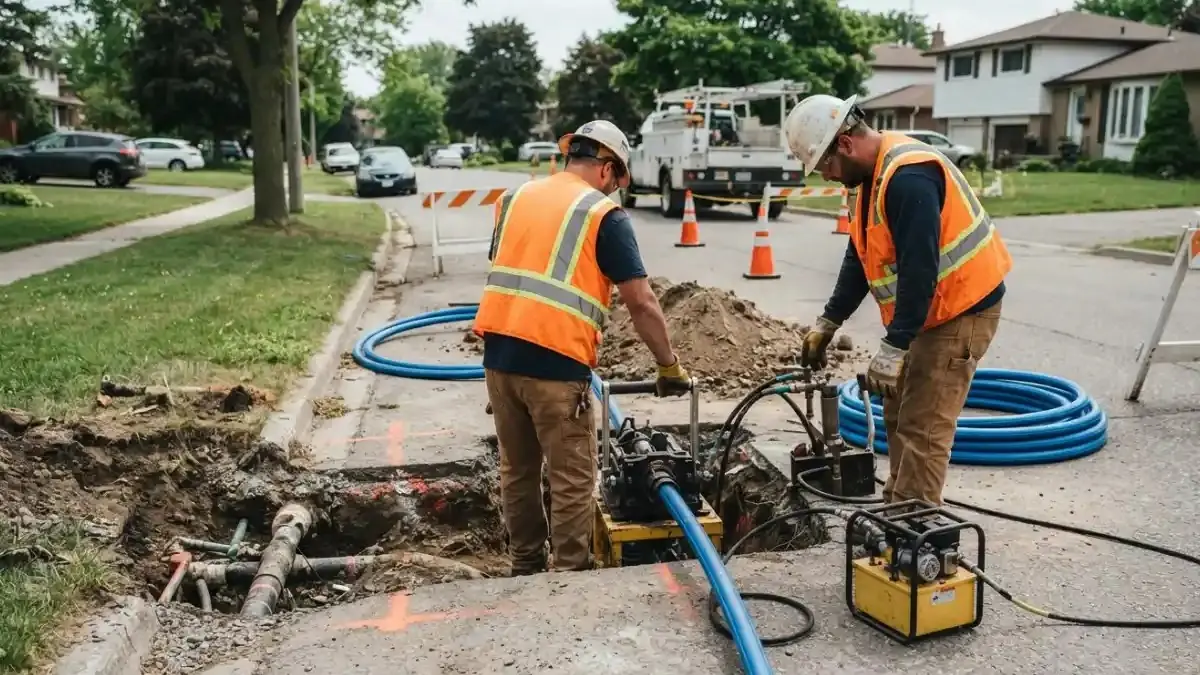
The pipe running from the street to your house is buried, so problems are invisible until they show up as weak flow or a wet lawn. A cracked or corroded line leaks pressure away before it ever reaches your taps. If the meter test or a damp patch points that way, water line repair is the next step, and a good plumber will locate the problem before breaking any ground.
Inside the house, older steel and some older copper can build mineral and rust deposits that narrow the bore of the pipe. The flow gets weaker over years, not days, and brown water at first use is a common companion sign. When much of a house shows this pattern, a conversation about repiping usually makes more sense than patching one run at a time.
A failing service line is one cause, and the state is also replacing lead lines. According to the Department of Environmental Protection, New Jersey's 2021 law requires full removal by July 2031 and annual mail notices to consumers until it happens. Ask your water system what material your line is made of.
Source: NJ Department of Environmental Protection, lead service line replacement law webinar, nj.gov/dep/watersupply/pdf/njdep-lslr-law-webinar-presentation.pdf
Safe habits while you troubleshoot
- Know where the main shutoff is and test it gently before you ever need it in a hurry
- Never force a stuck valve, since a snapped stem makes the problem worse
- Do not adjust a pressure regulator without a gauge on the line
- If you see water pooling near the entry point, close the main valve and call at once
- If water has reached outlets, appliances or a panel, keep clear of the electrical items and shut power at the breaker only if the floor around it is dry
Low pressure alone is rarely urgent. A sudden loss with wet ground or a flooding basement is, and that should go straight to dispatch. We answer 24/7, and a clear price comes before work starts.
Hot water only, or one bathroom only
If only hot water is weak, sediment in the tank or a partly closed valve on the heater is a common suspect. That is a water heater issue, not a house pressure one, and it sits outside the checks above.
If one bathroom or one floor is weak while the rest is fine, look at the local branch. A stop valve that has been bumped, a clogged filter screen or a restricted run of pipe serving only that area can behave like a house-wide fault until you test each outlet.
The reason to sort this out first is practical. Telling a plumber exactly which outlets are weak, and whether hot and cold differ, saves a lot of guessing on site. It is also the best clue for a neighbor in Edison or Piscataway comparing notes.
Frequently asked questions
Weak flow at every tap points to something shared, such as a partly closed main valve, a failing regulator, a leak or narrowing in the service line, or a supply problem outside your property.
Checking the main valve and asking neighbors takes only a few minutes and rules out two of the common causes.
Yes. A leak in the buried service line sends water into the ground before it reaches your taps. Signs are a running meter with everything off, wet or unusually green soil, and a sudden loss of pressure.
If you suspect this, a plumber should find the leak location before anyone digs.
Not always. A regulator that is fouled or failing can drop pressure for the whole house, but a plumber should confirm with a gauge before replacing it.
Do not turn the adjustment screw without a gauge, since you can overshoot and strain fixtures and the water heater.
Opening a partly closed valve, cleaning aerators and checking the meter are all reasonable. Anything on the buried line, at the regulator or involving a stuck valve is better left to a plumber.
Call if the meter keeps moving with everything off, or if you see water where it should not be.
Call your water utility using the number on your bill. If the problem is in the street, nothing inside your home will fix it, and they can tell you about local work.
We could not verify who serves each New Brunswick street, so check the bill rather than assuming.