
Smell gas or hear an alarm? Stop here
If you smell gas, leave the house at once, do not flip switches or use a phone inside, and call the gas utility or 911 from outside. If a carbon monoxide alarm sounds, get everyone into fresh air and call 911. No hot water can wait. These cannot.
If water is pooling around the heater, shut the cold supply valve above it, and do not step into standing water near electrical items. For an electric unit, turn off its breaker only if you can reach the panel while standing on dry floor.
Gas or electric: what each one needs to make heat
| Check | Gas tank heater | Electric tank heater |
|---|---|---|
| What must be present | Gas supply, a lit pilot or working igniter, clear venting | Power at the breaker and working heating elements |
| Common reason for cold water | Pilot out, failed thermocouple or igniter, closed gas valve | Tripped breaker, tripped reset button, failed element or thermostat |
| Safe first look | Dial setting, gas valve handle, status light | Breaker position, then stop if it trips again |
| Leave to a plumber | Any gas smell, relighting after repeated outages, flue problems | Opening panels, testing elements, anything with power on |
| Both types | Sediment rumbling, leaks at the base, water that is lukewarm only | Sediment rumbling, leaks at the base, water that is lukewarm only |
The shared problems matter most. A leaking base is a tank failure, not a settings issue, and a heater that has run out of hot water because everyone showered back to back may simply need time to recover.
Checks done and still cold? Call any hour and we will tell you what to do next.
(732) 466-1098Rentals, permits and who to ask
If you rent, tell the landlord or property manager about the missing hot water right away and keep a note of the date. Landlord duties on hot water are a legal question, and we could not verify the details for this post, so we are not quoting any rule. Ask the New Brunswick building department what applies to your unit.
If a heater is replaced, ask the New Brunswick building department whether a permit is needed before the work is scheduled. That rule was not verified here, and a plumber should be willing to tell you who handles the paperwork.
Source: not verified. Ask the New Brunswick building department.
Gas heater checks, one at a time
- Confirm the heater has a flameLook at the small window or status light on the control. If the pilot is out and you smell no gas, many units have printed relighting steps on the label. Follow them exactly or leave it to a plumber.
- Check the gas valve and dialThe gas shutoff handle on the pipe should run parallel to the pipe when open. The temperature dial should sit above the lowest setting, since someone may have turned it down.
- Listen for ignitionA click and a brief glow, then a flame, is normal. Repeated clicking with no flame, or a flame that goes out after a few seconds, often means a failing igniter or thermocouple.
- Look at the ventThe flue above the heater should be connected and free of debris, soot or loose joints. Staining or a damp, sooty smell means stop and call.
- Stop after one relight attemptIf the burner will not hold, do not keep trying. Repeated failed lighting is a sign of a parts problem or a safety shutdown doing its job.
Electric heater checks and when to stop
Breaker
Find the double breaker labeled for the heater. If it sits in the middle or off position, switch it fully off, then on. If it trips again, leave it off and call, because that points to a short or failed part.
Reset button
Behind a small access panel is a red reset button that trips on overheating. Pressing it means opening the panel, which should only happen with the breaker off, and the first press is the only one worth trying.
Elements and thermostats
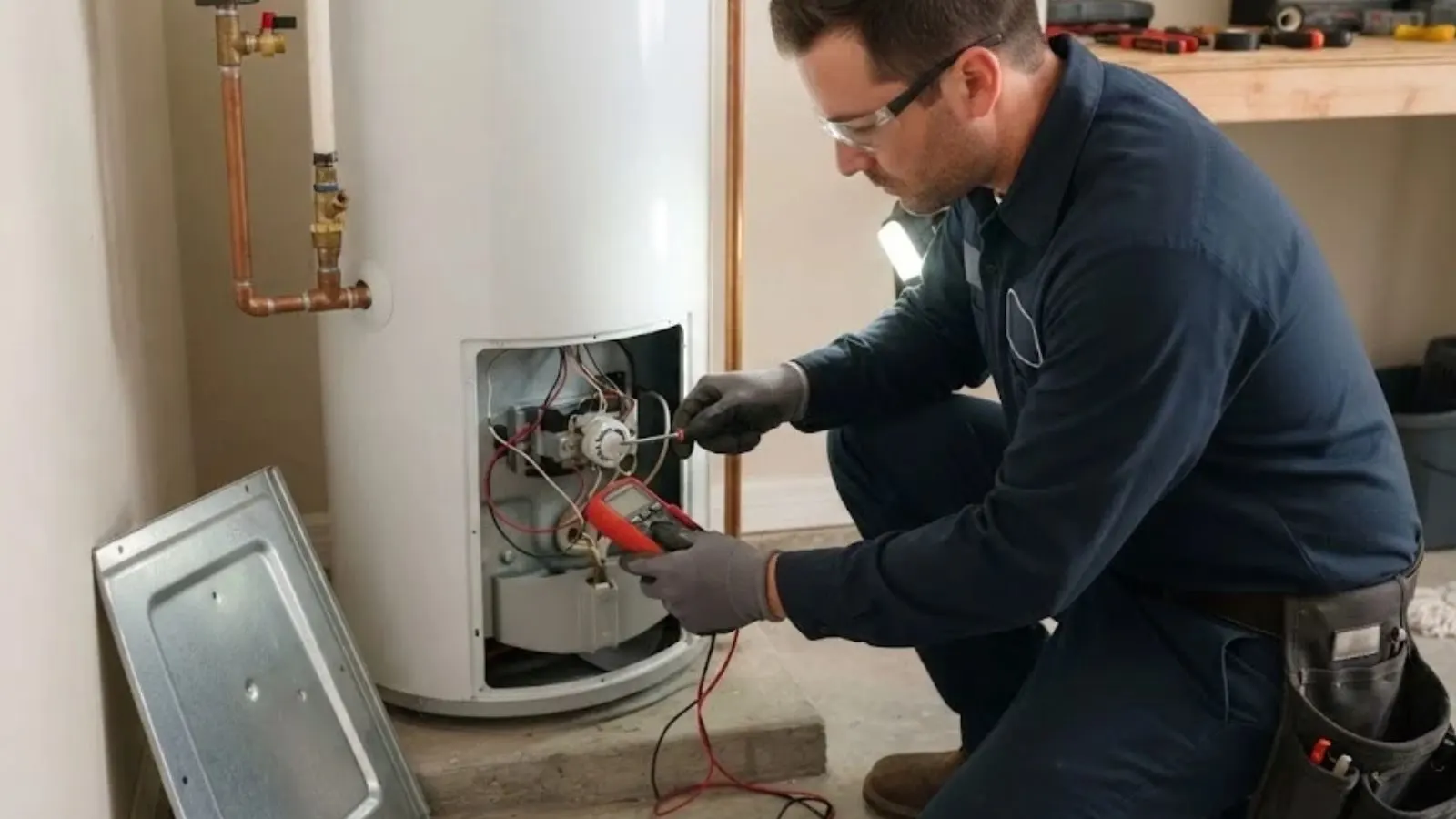
Failed upper or lower elements give lukewarm water or short supply. Testing them needs a meter and live power at some stage, so this belongs to a plumber.
Tank state
Rumbling, popping or a very short supply can mean sediment has built up, which weakens heating and strains the unit over time.
Whatever the fuel, do not raise the thermostat to the top setting to chase hotter water. Very hot water scalds quickly, especially for children and older adults, and it wears the tank faster. If the dial is already at a sensible setting and the water is still cold, the cause lies elsewhere.
Also remember that a heater which has only just been repaired or reset needs time to reheat a full tank. Give it a reasonable wait before deciding the fix failed.
When repair stops making sense
Age and condition decide the next move. A heater that has leaked at the tank seam cannot be patched, and one that has needed several repairs in a short time is telling you its parts are wearing out together. In those cases water heater replacement is often the more sensible choice than another round of repairs.
Ask for the written price for each option before work starts, and ask what is included, such as old unit removal, venting and fittings. A clear comparison beats a rushed decision at a cold tap.
The size of the household matters too. If hot water runs out only when several people use it, the tank may be too small, not broken.
Before you agree to a new heater, know that a replacement of like capacity requires a permit, according to a state Department of Community Affairs code alert. A contractor who says no permit is needed is worth questioning.
Source: NJ Department of Community Affairs code alert on 2018 NJ Register changes, nj.gov/dca/codes/alerts/pdfs/OM_MW_03052018.pdf
Calling it in, any hour
We take calls 24/7 and offer same-day appointments when available. Describe the fuel type, what you checked and what you saw. If the heater leaks or you smelled gas, say so first.
The same dispatch line serves callers in Piscataway and Edison, along with New Brunswick and nearby towns, so a call from a neighboring address reaches the same people.
Frequently asked questions
The unit may be running but unable to heat enough, due to a failed element, sediment, or a dip tube problem. A short supply of hot water after heavy use can also be normal.
If the heater runs for a long time and the water stays lukewarm, call for a diagnosis.
A gas unit has a gas line, a control with a pilot or igniter, and a vent pipe running up from the top. An electric unit has a power cable, usually in a metal conduit, and no flue.
If you are not sure, treat it as gas until you know, and do not relight anything if you smell gas.
Only if there is no gas smell, the unit has clear instructions on its label, and you follow them exactly. If it will not stay lit after one attempt, stop.
Any smell of gas means leave the house and call the gas utility or 911.
Yes. Dispatch is 24/7, and same-day appointments are available when the schedule allows. Tell the dispatcher what fuel type you have and whether there is a leak or gas smell.
You will hear a clear price before work starts.
Tell them in writing as soon as possible and ask when the repair will be scheduled. Keep a record of the date you first reported it.
For what the law requires, ask the New Brunswick building department. We have not verified a specific rule, so we do not quote one.