
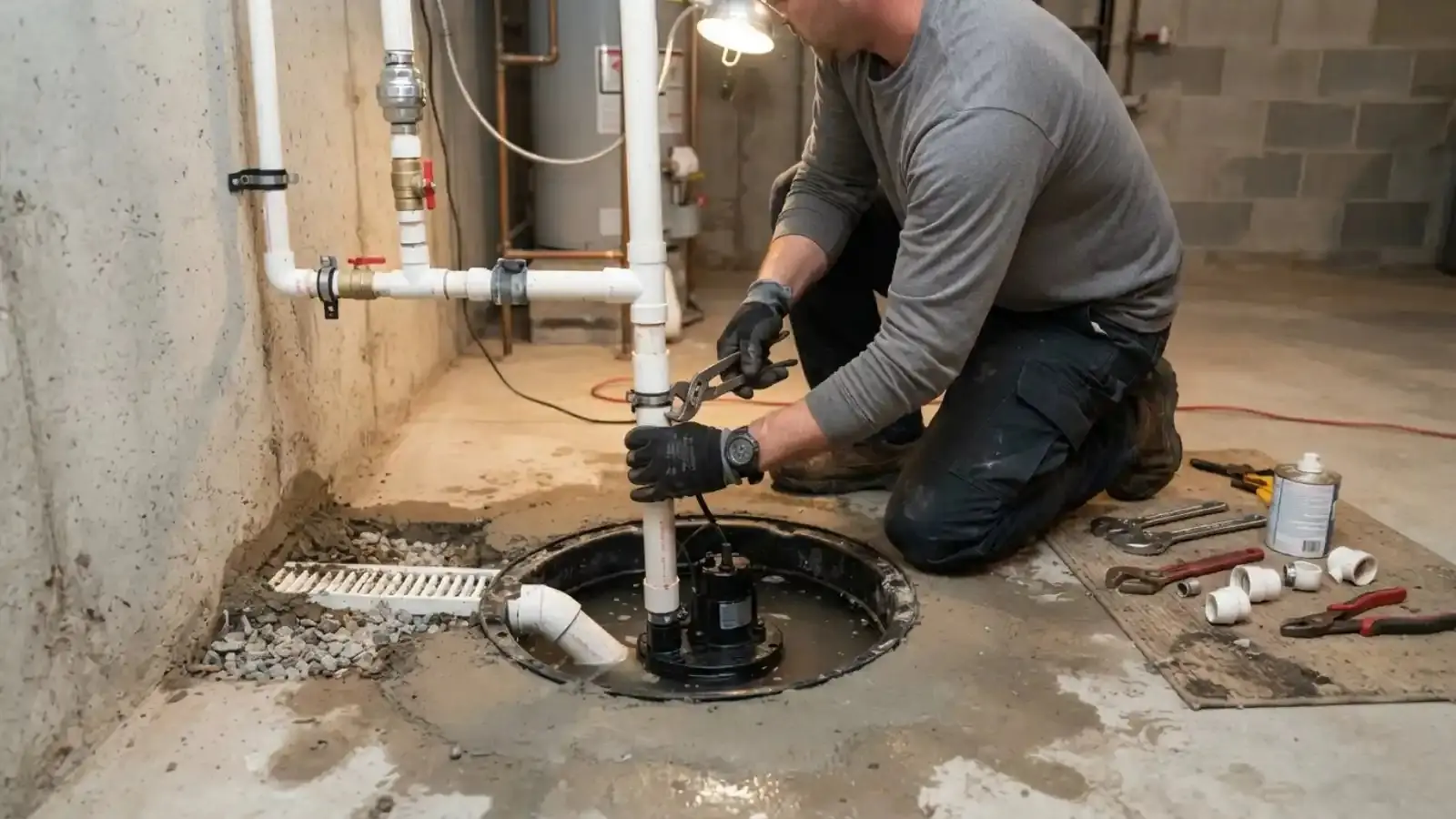
What the discharge pipe actually does
A sump pump sits in a pit and lifts groundwater that collects under the basement floor. The discharge pipe carries that water up and out of the house. If the pipe is undersized, sagging or pointed at the wrong place, the pump runs hard and the water often finds its way back.
Think of the pump as the engine and the pipe as the exhaust. Most failures we hear about at a bad moment, such as heavy rain, trace to the outlet side: a clogged end, a frozen run or a pipe that dumps water beside the foundation.
Where the water should end up
The goal is to move water well away from the foundation, onto ground that slopes away from the house, or into an approved storm drainage route. Outlet pipes that stop a foot from the wall simply recirculate the water through the soil and back into the pit.
Check that the end of the pipe points downhill and is not buried in mulch. A grating or flap at the end keeps animals out while still letting water pass. Whatever route you choose, make sure it does not send water onto a neighbor's lot or across a walkway where it can freeze.
Planning a new discharge line? Call and we will talk through your layout.
(732) 466-1098Why the sanitary sewer is the wrong destination
A sump pump moves clean groundwater and rainwater. A sanitary sewer is built for household waste. When extra flow from many sump pumps hits a sewer during a storm, the pipe can run full, and the load goes to the treatment plant for no reason.
Some towns restrict or ban sump discharge into the sanitary sewer, and some inspect for it. We have not verified the rule for New Brunswick, so ask the building department before you connect to any drain line inside the house.
Comparing outlet options
Each route has trade-offs, and the right one depends on your lot, your neighbors and what the town allows. This table compares the usual choices side by side.
| Outlet option | Best for | Watch out for |
|---|---|---|
| Lawn or yard, sloped away | Lots with room and a clear grade | Soggy ground and winter ice near walkways |
| Splash block or buried extension | Short runs near the wall | Water drifting back toward the foundation |
| Storm drain or street, if allowed | Tight lots with no yard | Needs approval from the town first |
| Dry well or drainage basin | Properties with well-draining soil | Fills up in long rain and needs upkeep |
| Sanitary sewer | Nobody should assume this | Restricted in many towns and adds load to the sewer |
If none of these fits your lot, ask the plumber to walk the property before quoting. The outlet matters as much as the pump.
Ask the town, not the internet
Rules on where a sump line may discharge vary from town to town, and the details change. We did not verify a New Brunswick ordinance for this post. A short call to the building department is cheaper than removing a line that should never have been connected.
Bring your address and a rough sketch of where the pit sits and where the pipe would exit. Ask whether a permit applies and who inspects it.
Source: practical guidance, not a verified ordinance
Local sewer systems and your pump
In Highland Park, the borough wastewater system is run by a Middlesex Water subsidiary and includes roughly 32 miles of sewer main and more than 650 sanitary manholes. A system that size is sized for waste, so adding groundwater to it from a basement pump is a practical concern as well as a rules question. If you live in Highland Park, ask the operator how they want sump water handled.
We have not verified the sump discharge rules for New Brunswick or East Brunswick. Call the building department or construction code office and ask whether a permit or inspection applies to a new discharge line, and ask where they allow the line to end.
Pipe material and layout choices
Each choice affects how long the system lasts and how loud it is. A plumber should explain why a given option fits your wall, yard and pump model.
Rigid PVC
Holds its slope, resists crushing and is the usual choice for a fixed run through the wall.
Flexible hose
Easy to place, but it sags and traps water, so it suits short temporary runs more than a permanent line.
Check valve
Sits just above the pump and stops water in the pipe from dropping back into the pit each cycle.
Freeze protection
An exposed outlet in winter can fill with ice, so the end needs a slope and sometimes a relief opening.
What a proper install includes
A sound discharge install starts with a plan for the outlet point. Then comes the run itself, the check valve, sealed wall penetration and a test with water to confirm the pump clears the pit and the pipe drains without leaks.
Ask for the work scope in writing, including where the pipe ends and what happens in freezing weather. If the pit floods repeatedly, ask whether the problem is wider than the pump. Our basement waterproofing page explains when drainage work belongs on a bigger plan.
According to the New Jersey Division of Consumer Affairs plumbing board, plumbing in the state is limited to master plumbers and authorized plumbing contractors. A discharge line tied into other piping is plumbing work, so confirm who is doing the install and ask the building department whether a permit applies.
Source: NJ Division of Consumer Affairs, State Board of Examiners of Master Plumbers FAQ, njconsumeraffairs.gov/plu/Pages/FAQ.aspx
What changes the price of the job
We do not post flat numbers because no two basements are alike. Ask for a clear price before work starts, and we offer a real number by phone once you describe the layout.
Checks before the next storm
- Pour a bucket of water into the pit and watch the pump start and stop.
- Look at the outdoor end of the pipe and clear leaves or dirt.
- Confirm the discharge points away from the house and from your neighbors.
- Shut power to the pump before touching anything near standing water.
- If water is already rising in the pit and the pump is silent, call right away.
Frequently asked questions
Far enough that water cannot flow back toward the foundation. A plumber checks your grade and fence lines before picking the spot, and the answer depends on the lot.
Please do not do this until the building department tells you it is allowed. Clean groundwater is not meant for the sanitary system, and many towns restrict it.
Most installs include one. It keeps water from falling back into the pit when the pump stops, which cuts how often the pump cycles.
Yes. Our line is open 24/7 and we offer same-day appointments when available. If the pit is overflowing, do not step into standing water near electrical items, and call.
Ask whether a permit or inspection is needed, where the line may end, and whether discharge to a public street or storm drain is allowed. Write down the answers.