Why two fixtures give up at the same moment
Every drain in a house feeds a branch, and branches feed the main drain that leaves the building. A toilet and a shower in the same bathroom often join the same branch within a few feet of each other. If the blockage sits downstream of that join, both fixtures lose their exit at once.
Think of it like a highway. A toilet and a shower are two on-ramps, and the main drain is the road they merge onto. A stalled car past the merge stops traffic from both ramps, no matter how clear each ramp is.
Compare that with a single slow shower. Hair and soap build up in the trap right under the drain, so only that one fixture suffers and the toilet flushes normally. When the toilet and the shower both struggle, the trap is rarely the culprit. Look further down the pipe.
The pattern matters more than the fixture. Ask yourself which drains still work, which ones are slow, and whether anything gurgles when you run water somewhere else. Those answers narrow down where the plug is before anyone brings a tool into the house.
What the pattern points to
| What you see | Likely location | Good next step |
|---|---|---|
| Toilet and shower slow, sink fine | Shared bathroom branch | Stop using both and call for snaking |
| Toilet and shower plus a ground floor drain | Main drain inside the house | Stop all water use and call |
| Water rises in the shower when the toilet flushes | Blockage just past the join | Do not flush again |
| Gurgling from drains after a flush | Partial block or venting trouble | Call and describe the sounds |
| Basement floor drain bubbling | Main line or public sewer | Check neighbors and call |
The table is a guide, not a diagnosis. Houses in Middlesex County differ in layout, and a plumber can see what you cannot. Still, it helps you give a clear description on the phone, and a clear description speeds up the visit.
A blocked main line is plumbing work, and according to the New Jersey Division of Consumer Affairs it belongs to licensed master plumbers or authorized contractors, so ask for proof of the license before anyone opens the cleanout.
Source: NJ Division of Consumer Affairs, State Board of Examiners of Master Plumbers FAQ, njconsumeraffairs.gov/plu/Pages/FAQ.aspx
Both fixtures backing up? Call (732) 466-1098 and describe what the water is doing.
(732) 466-1098What to do in the first ten minutes
- Stop adding waterDo not flush, run the shower, or start the washing machine or dishwasher. Every gallon you add has nowhere to go and may rise out of the lowest fixture.
- Look at the lowest drainCheck the basement floor drain or the tub on the lowest floor. Water or sewage showing there means the blockage is in the main line, and the lowest opening is where the overflow will appear.
- Protect the floorLay towels around the toilet base and tub. If water is spreading toward outlets or appliances, shut off power to that area at the panel, and never touch electrical items standing in water.
- Keep the plunger gentleA toilet plunger can free a simple toilet clog. Do not keep forcing it if the shower is also backing up, because the pressure can push dirty water back out of the weakest opening.
- Skip the chemicalsDrain openers sit in a blocked pipe and can burn skin and eyes when the plumber opens the line. Leave them on the shelf and tell the plumber if you already poured some.
Who owns the pipe when the blockage is outside
Where the blockage sits decides who fixes it. Inside your walls and under your floor, the pipe is yours. Out at the street, the sewer main belongs to whoever runs the collection system for your town. We have not verified how New Brunswick splits that responsibility, so ask the city or your landlord who to call about a main in the street.
Next door in Highland Park, the borough's water and wastewater system is operated by Utility Service Affiliates, a subsidiary of Middlesex Water Company, and the borough owns its sewer collection network. That means a backup in the public main there is a utility matter, not something a homeowner repairs. If neighbors on your block are backing up too, report it to the operator for your address before paying for work on your own line.
Source: Middlesex Water Company page on Utility Service Affiliates, Highland Park
Signs the main line is the problem
A main line blockage rarely announces itself with one fixture. Roots entering a joint, grease that hardened, wipes that should have gone in the trash, and a bellied section of pipe can all stop the flow at the same spot. Everything upstream then backs up, and the lowest fixtures show it first.
Watch the timing as well. If the clog came on slowly over weeks, with gurgles and slow drains here and there, a partial blockage has been growing. If everything failed in one evening after a big laundry day, a heavy load may have pushed debris into a weak spot.
A camera inspection shows the actual cause instead of guessing. When roots or a damaged section turn out to be the cause, clearing alone only buys time, so ask what the video shows. Our sewer line cleaning page explains how clearing the main differs from clearing a single branch.
If you live in an apartment or a two-family house
Shared buildings add a twist. A stack serves units above and below yours, so a blockage can show up in the lowest unit first even though the debris came from upstairs. If your ground floor tub is filling when the neighbor flushes, the problem is in the shared stack or building drain.
In that case, tell your landlord or building manager right away, and give them the same description you would give a plumber. Do not run water to test it. Several people using water at once is the quickest way to push sewage out of a floor-level fixture.
What a visit usually involves
The NJ Division of Consumer Affairs plumbing board states in its FAQ that plumbing in New Jersey is to be performed only by a master plumber or an authorized plumbing contractor. That includes work on a shared main line.
Questions first
The plumber asks which fixtures are affected, when it began, and whether anything changed recently. Your answers shape where the cable goes in.
Access point
Common entry points are a cleanout in the basement or yard, a toilet pulled off its flange, or a roof vent. The right one depends on how your house was built.
Clearing and testing
After the cable or jetter passes, the plumber runs water through several fixtures to confirm they all drain freely.
Camera if needed
A camera shows roots, a sag, or a cracked section. Ask to see the footage so you know what was found.
Source: NJ Division of Consumer Affairs, State Board of Examiners of Master Plumbers FAQ, njconsumeraffairs.gov/plu/Pages/FAQ.aspx
Snaking, jetting and what a plumber may suggest
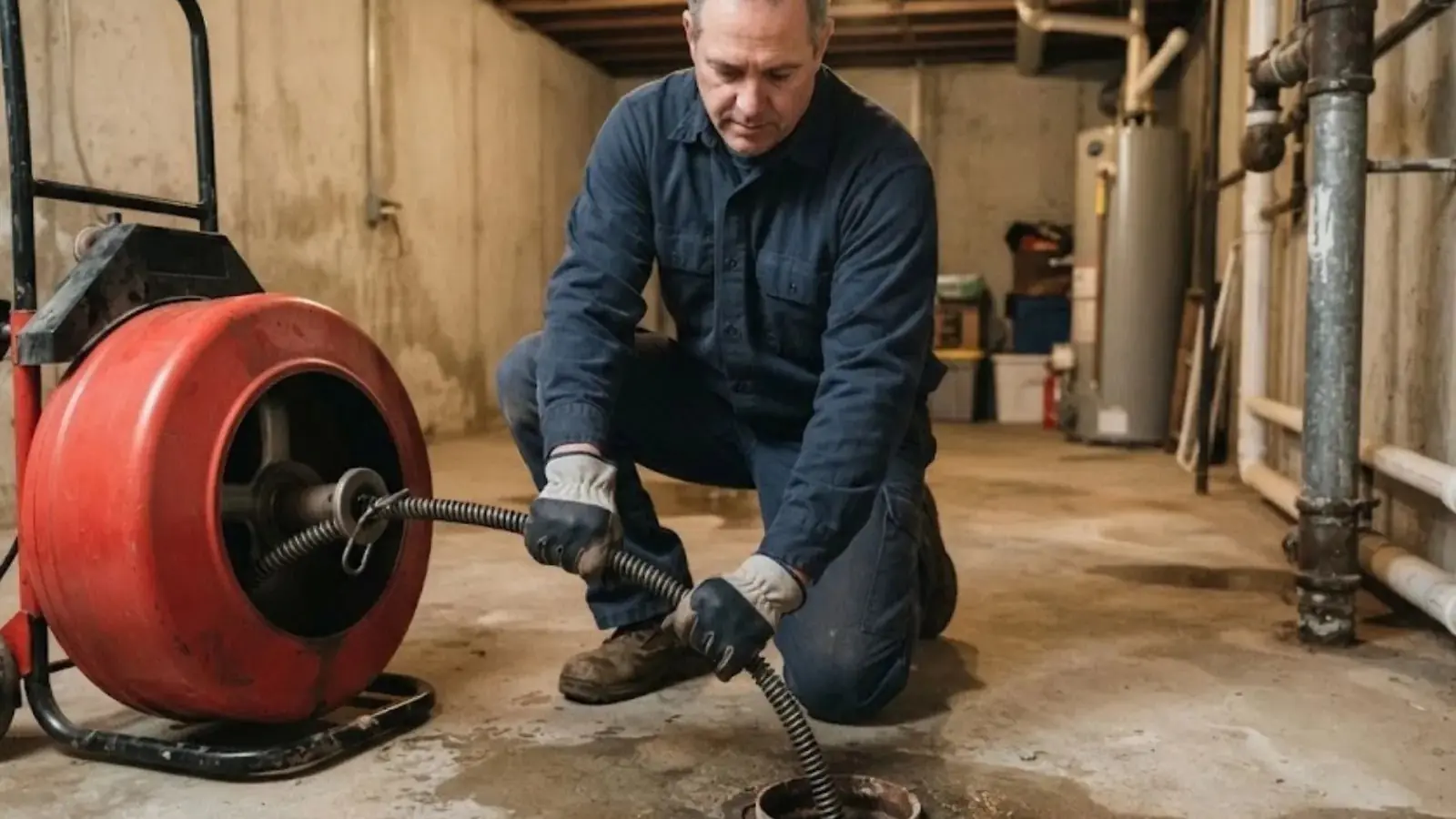
For a branch clog, a cable machine with the right head usually breaks through and pulls debris back. For heavy grease or scale on the pipe walls, a plumber may suggest high-pressure water instead, because a cable can punch a hole through the blockage and leave a coating behind.
We cannot promise what a technician will find before the cable goes in. Hair, paper, wipes, grease, and roots are all common, and each one calls for a different approach. Ask which method is being used and why, and ask whether a camera look afterward is worth it.
Our drain cleaning team can explain both methods over the phone before a visit. The price depends on access, length of line, and what is found, so ask for it in writing before work starts.
Habits that stop a repeat
- Flush only toilet paper and human waste. Wipes labelled flushable still tangle in pipes.
- Put a hair catcher in the shower drain and empty it often.
- Scrape cooking fat into the trash, not down any sink that shares the main line.
- Run hot water for a minute after heavy use of a bathroom to carry soap along.
Calling for help in the middle of this
This is the kind of problem that gets worse overnight, since every flush from another bathroom adds water. We take calls 24/7, so a backup that starts at midnight does not have to wait until morning. Same-day appointments are offered when available, and you will hear a clear price before work starts.
We are licensed and insured and serve New Brunswick and nearby towns. If you live just across the line, our Piscataway and Highland Park coverage pages show how we handle calls in those towns. Call (732) 466-1098 and tell the dispatcher which fixtures are affected, and what you see in the lowest drain.
Frequently asked questions
They usually share a branch or the main drain. A blockage below the point where they join stops both. A single clogged fixture, by contrast, is normally a local trap problem.
A plunger can clear a simple toilet clog. If the shower is backing up as well, stop and call, since forcing water into a blocked line can send it back out in the wrong place.
Avoid it. Any water you send into a blocked line has to go somewhere, and the lowest fixture in the house is where it tends to surface. Use a neighbor or a public restroom until the line is cleared.
Ask the city who operates the sewer main for your address. We have not verified that for New Brunswick. If neighbors are backing up too, report it to the operator. If only your house is affected, the problem is probably on your private line, which we can look at.
Often the cable or a camera shows it quickly, but we cannot promise it. Tell the dispatcher everything you noticed, and ask for a clear price before work starts.