
Run the two minute test first
- Shut every tapMake sure no one is showering, no washer or dishwasher is running, and the ice maker is not filling. Flush nothing.
- Find the meterIt is often in the basement near the front wall, or in a pit outside near the curb. Lift the lid with care and keep fingers clear.
- Read the leak indicatorMany meters have a small triangle or dial that spins when any water moves. If it turns with everything off, water is flowing.
- Write the numbersNote the reading, wait fifteen minutes with all water off, and read again. A change means a leak.
- Close the main valveTurn the main shutoff clockwise, then check the meter. If it stops, the leak is inside the house. If it keeps moving, the leak is before the valve, on the service line.
Common culprits when the meter will not stop
Running toilet
A worn flapper lets water seep into the bowl. A drop of food coloring in the tank will show up in the bowl in ten minutes if it leaks.
Dripping fixtures
A hot water tap that never quite closes can add up over a month.
Water heater relief valve
A weeping valve or discharge pipe near the heater is a small constant loss.
Buried line
A crack between the street and the house can leak into the soil without any wet spot showing.
Meter still moving after the test? Call (732) 466-1098 and we will plan the search.
(732) 466-1098Billing and meter questions by town
Who reads and bills your meter depends on where you live. We have not verified the water supplier or billing contact for New Brunswick addresses, so ask the city or look at your latest bill for the utility name and phone number. Call them with the meter reading and the date, and ask what their process is for a suspected leak.
Just across the river, Highland Park gets its water from Middlesex Water Company, and the borough's system is operated by Utility Service Affiliates under an agreement that runs to July 2030. The operator's page links to a service line material verification test, which is a useful step if you want to know what your line is made of. Billing questions there go to the operator, not to a neighboring city.
Source: Middlesex Water Company page on Utility Service Affiliates, Highland Park
Where the water may be going
| Test result | Likely area | Next step |
|---|---|---|
| Meter stops when main valve is shut | Inside the house | Check toilets, taps, heater and appliance lines |
| Meter keeps moving with main shut | Service line outside | Call for leak detection |
| Only moves when one toilet is checked | That toilet | Replace the flapper or fill valve |
| Moves slowly and steadily | Small hidden leak | Have it located by tools, not guessing |
| Moves in bursts | Appliance or softener cycling | Check the schedule of each appliance |
A meter that moves in bursts is not always a leak. Some water treatment systems and ice makers refill on their own, so rule those out before calling anyone.
What to do before the next bill
Write down today's reading and the time. Photograph the meter. Repeat in the morning before anyone uses water. That record shows whether the loss is steady and gives your utility something concrete to look at.
Call the utility and ask how they handle an unexplained high bill. Some will review usage history, and some have rules for leak adjustments. We have not verified how New Brunswick handles that, so ask before assuming anything. Keep notes of who you spoke with and when.
Fix the cheap, visible things first. A toilet flapper or a faucet washer is quick, and if the meter still moves afterward you have narrowed the search.
This describes New Jersey American Water service areas, so check your own utility. According to New Jersey American Water, the customer maintains the service pipe from the curb stop to the building, and the curb stop valve belongs to the company. Do not turn it yourself. Call the utility if the leak may sit before the curb.
Source: New Jersey American Water, customer rights and responsibilities, amwater.com/njaw/customer-service-billing/rights-responsibilities (New Jersey American Water service areas only)
Signs a leak is behind the walls or under the floor
- A damp patch, stain or bubbling paint on a ceiling or wall.
- A musty smell in a closet, basement corner or under a sink.
- A warm spot on the floor, which can point to a hot water line.
- Soft or lifting flooring near a bathroom or kitchen.
- The sound of water hissing when the house is quiet.
- Wet ground or a patch of grass that stays green near the street side of the house.
Why a small leak still matters
A leak that drips into a wall does not stay small. Moisture feeds mould, loosens flooring and softens drywall, and the meter is charging you for every gallon along the way. Finding it early is almost always the cheaper road, even when the repair itself takes effort.
Keep in mind that a slow leak can run for months before a stain appears. Your meter is the one honest witness, because it counts water whether or not you see it. Check it again after any repair to confirm the number has stopped changing.
Seasonal checks help too. Look at the meter before and after a vacation, and compare winter and summer readings, so you learn what normal looks like for your household.
How a plumber finds what you cannot see
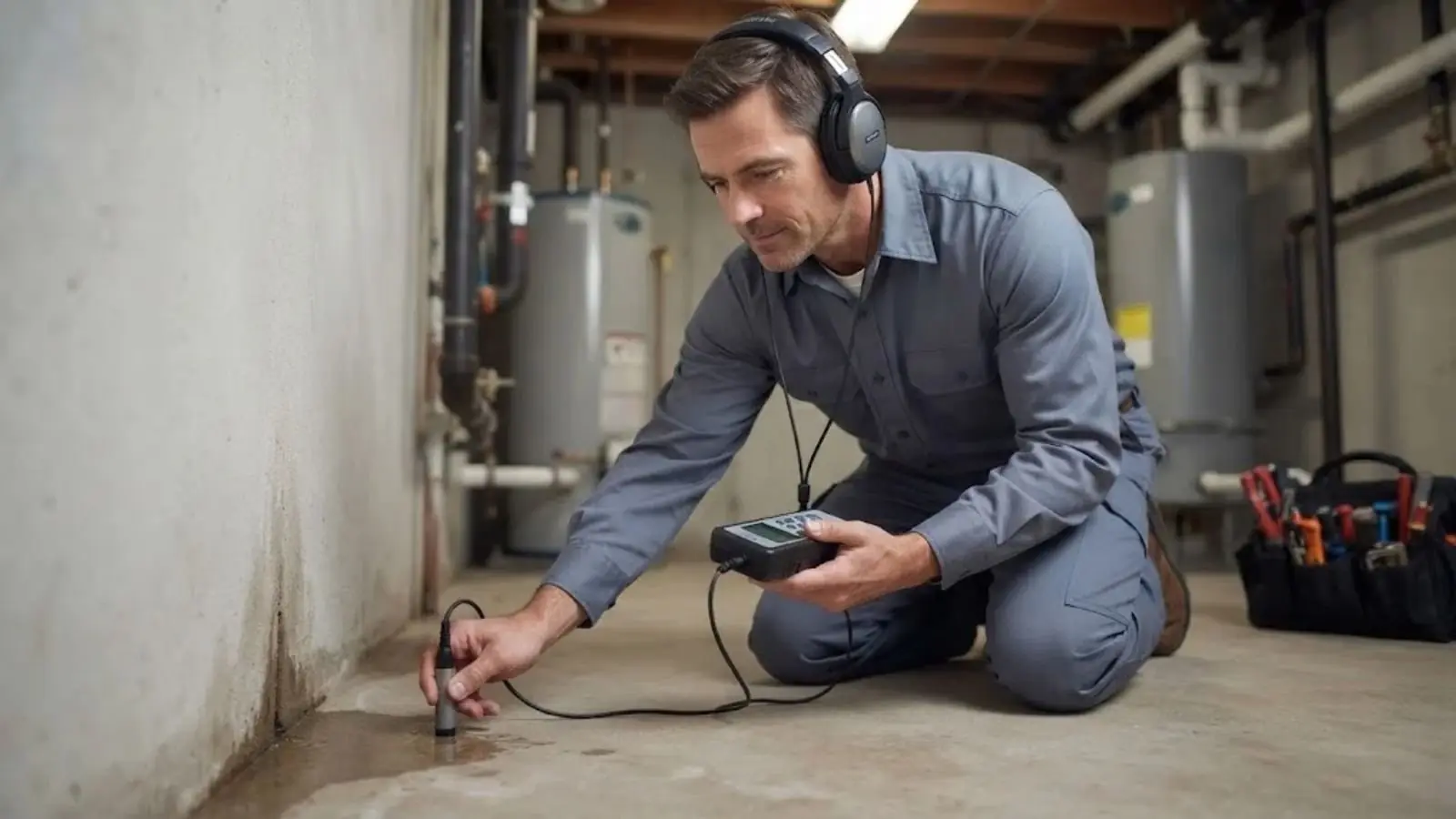
Finding a hidden leak is a process of elimination. A plumber isolates sections of pipe with valves, listens with sensitive equipment, and may use thermal imaging or pressure tests to narrow down the area before cutting anything open. The goal is a small, precise opening, not a hole in every wall.
We cannot say in advance what a technician will find. Common results include a failed fitting, a pinhole in an older pipe, a leaking supply line to an appliance, or a break in the buried line. Our water line repair page explains what happens when the problem is outside the house.
Ask for the price in writing before work starts. It depends on how hard the leak is to reach, how much needs to be opened, and whether the line is inside or outside.
If the leak is active right now
If water is visible and spreading, close the main valve, shut off power to the wet area, and never touch electrical items standing in water. We take calls 24/7, and same-day appointments are offered when available.
We serve New Brunswick and nearby towns, including Highland Park and Edison. We are licensed and insured. Call (732) 466-1098, tell us what the meter did during your test, and we will plan the visit from there.
Frequently asked questions
Water is moving through the pipes somewhere. Toilets, dripping taps, appliance lines and buried service lines are the usual suspects. The shutoff test splits inside from outside.
It happens, but a leak is far more common. If the meter keeps moving with the main valve closed and a plumber finds no leak, ask your utility to test the meter.
Usually the next billing period shows the change, because the lost water stops. Compare readings before and after the repair and keep the notes.
Start with the utility named on your bill. We have not verified New Brunswick's process for leak adjustments, so ask what records they want, such as meter readings and repair invoices.
Not always. A slow movement can wait for a daytime visit. If you see water spreading or hear a steady rush, close the main valve and call.